

Oracle restaking protocols are reshaping DeFi middleware by turning essential oracle services into yield-generating machines. Providers like Chainlink and Pyth now let token holders stake or restake assets to secure data feeds, unlocking new revenue streams amid a competitive landscape. As of February 22,2026, Chainlink's LINK trades at $8.68, down 2.47% in the last 24 hours with a high of $8.99 and low of $8.68. Pyth Network's PYTH sits at $0.052004, reflecting a 3.81% dip from its 24-hour high of $0.054419. These dips come as restaking innovations gain traction, promising to bolster security while delivering sustainable DeFi oracle yields.
Restaking builds on liquid staking successes like Lido's stETH, which commands over $10.2 billion in TVL. By layering oracle-specific staking atop EigenLayer-style mechanisms, protocols monetize middleware through diversified yields. This isn't just hype; Chainlink's staking beta, launched December 6,2025, capped initial pools at 25 million LINK to underwrite oracle performance guarantees. Early participants earn native rewards, aligning incentives for data accuracy in a market projected to explode with asset tokenization.
Chainlink Restaking: Fortifying the DeFi Backbone
Chainlink has long been the gold standard for decentralized oracles, powering the majority of DeFi TVL with reliable cross-chain data. Its staking service evolves this dominance into Chainlink restaking, where LINK holders secure services against slashing for poor performance. This beta rollout coincided with a 32% LINK rally, signaling market approval. Yet at $8.68 today, the token appears undervalued, especially with predictions pegging 2026 as Chainlink's breakout year amid tokenization booms.
Data underscores the shift: Chainlink's expansion into automation and data integrity supports multi-chain DeFi, where restaking amplifies network security. Holders restake to earn yields beyond basic staking, creating a flywheel of participation. Compare this to traditional staking; oracle restaking adds performance-backed premiums, potentially 5-15% APY based on pool dynamics and demand. In my view, this positions Chainlink ahead in the oracle wars, blending decentralization with proven reliability over speed alone.

Pyth Network's Speed Play in Oracle Restaking
Pyth challenges Chainlink with a pull-based oracle model, delivering low-latency prices ideal for high-frequency DeFi apps. At $0.052004, PYTH has room to run, with forecasts eyeing $0.75 by late 2026 on staking surges and integrations. Oracle Integrity Staking incentivizes safer feeds, letting publishers monetize data contributions directly. Supporting 100 and chains and $149.1 billion in Q1 2025 transaction value, Pyth's appchain architecture pushes fresher prices, reshaping data consumption.
Pyth restaking emphasizes on-demand pulls, reducing gas costs and latency versus push models. Stakers back publisher integrity, earning yields tied to feed reliability. This contrasts Chainlink's broader scope; Pyth bets on speed winning the next oracle battle. Economic data supports it: moderate DeFi growth could drive PYTH to $1.00 long-term, fueled by roadmap wins. However, with current volatility, restakers must weigh risks like integration dependency against Chainlink's entrenched TVL moat.
Pyth Network (PYTH) Price Prediction 2027-2032
Forecasts based on oracle restaking protocols, DeFi adoption, staking surges, and market cycles starting from current 2026 price of ~$0.05
| Year | Minimum Price | Average Price | Maximum Price |
|---|---|---|---|
| 2027 | $0.12 | $0.28 | $0.55 |
| 2028 | $0.20 | $0.45 | $0.90 |
| 2029 | $0.35 | $0.75 | $1.50 |
| 2030 | $0.55 | $1.20 | $2.40 |
| 2031 | $0.85 | $1.85 | $3.70 |
| 2032 | $1.25 | $2.75 | $5.50 |
Price Prediction Summary
Pyth Network (PYTH) is projected to experience substantial growth from 2027-2032, with average prices rising from $0.28 to $2.75 (over 880% cumulative increase), fueled by restaking yields, DeFi expansion, and oracle competition. Minimums reflect bearish regulatory or market downturns, while maximums assume bullish adoption and bull cycles.
Key Factors Affecting Pyth Network Price
- Oracle restaking protocols monetizing Pyth middleware for enhanced DeFi yields
- Staking surges and pull-oracle model gaining traction over Chainlink competitors
- DeFi TVL growth and multi-chain integrations boosting demand
- Market cycles with potential 2028-2029 bull run driving altcoin rallies
- Regulatory developments favoring decentralized data infrastructure
- Technological upgrades improving speed and reliability for high-frequency DeFi apps
Disclaimer: Cryptocurrency price predictions are speculative and based on current market analysis. Actual prices may vary significantly due to market volatility, regulatory changes, and other factors. Always do your own research before making investment decisions.
Middleware Monetization: Yield Mechanics Compared
Both protocols excel in middleware monetization, but mechanics differ sharply. Chainlink's staking pools grow iteratively, starting at 25 million LINK to test slashing economics. Yields derive from fees and penalties, fostering trust in high-stakes DeFi like lending. Pyth's model rewards data providers via pulls, with restaking securing against manipulation. Table stakes: Chainlink leads TVL and adoption; Pyth edges latency, processing billions in value.
Restaking protocols layer atop these, akin to EigenLayer for DA, enabling oracle networks to tap liquid staking derivatives. For developers, this means composable yields: stake LINK, restake via third-party for oracle and AVS rewards. Investors see diversified oracle network revenue; at current prices, LINK $8.68 offers stability, PYTH $0.052004 higher beta. Balanced portfolios blending both capture the oracle restaking boom, harmonizing reliability with velocity in DeFi's middleware layer.
| Metric | Chainlink (LINK) | Pyth (PYTH) |
|---|---|---|
| Price (2026-02-22) | $8.68 | $0.052004 |
| 24h Change | -2.47% | -3.81% |
| Model | Push-based | Pull-based |
| Key Strength | Decentralization | Speed |
Developers building restaking protocols DeFi applications can leverage these mechanics for composable security. For instance, oracle restaking via EigenLayer AVSs allows LINK or PYTH to secure both data feeds and DA layers simultaneously, multiplying yields without diluting focus. On-chain data shows Chainlink securing over $30 billion in DeFi value, while Pyth's $149.1 billion Q1 2025 volume highlights throughput advantages. At current valuations, LINK's $8.68 stability suits conservative allocators; PYTH's $0.052004 volatility appeals to yield chasers.
Unlock 4-12% DeFi Yields: Oracle Restaking Guide for Chainlink (LINK $8.68) & Pyth (PYTH $0.052)
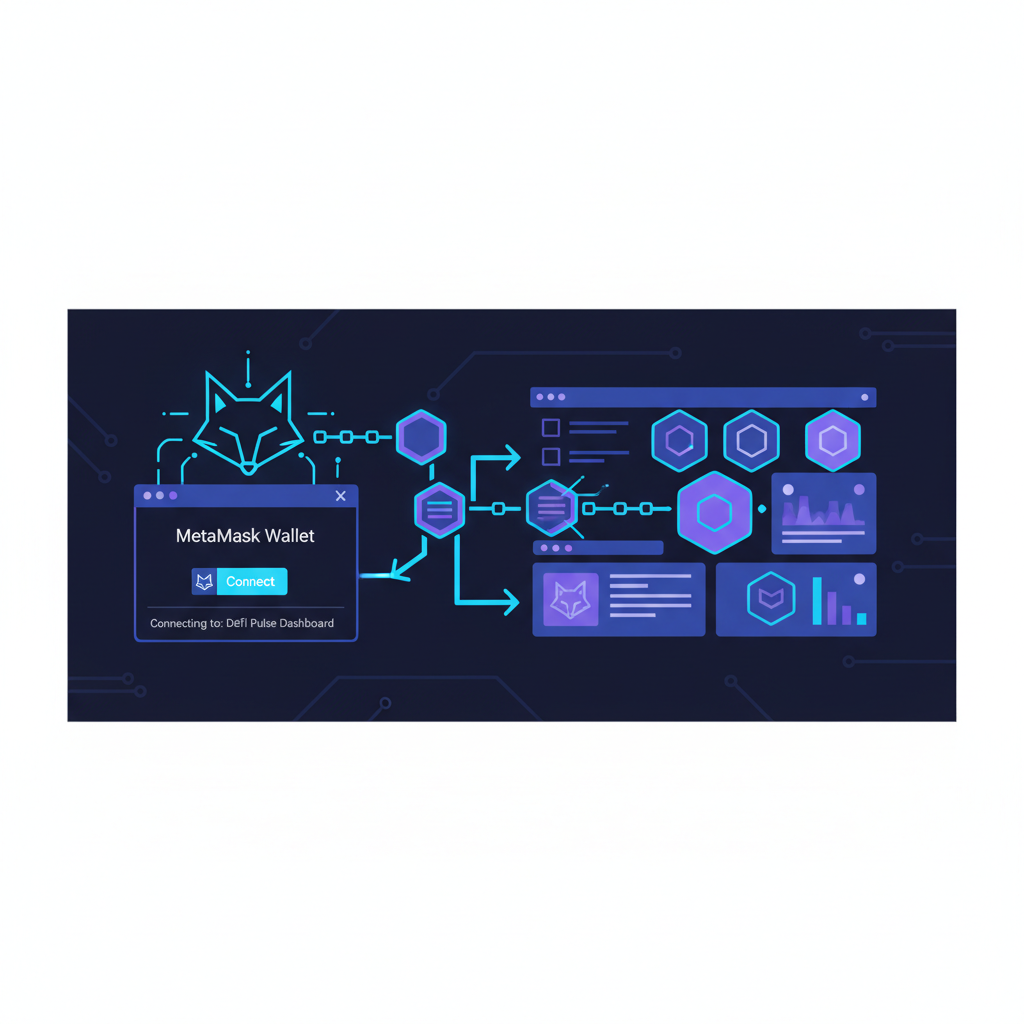
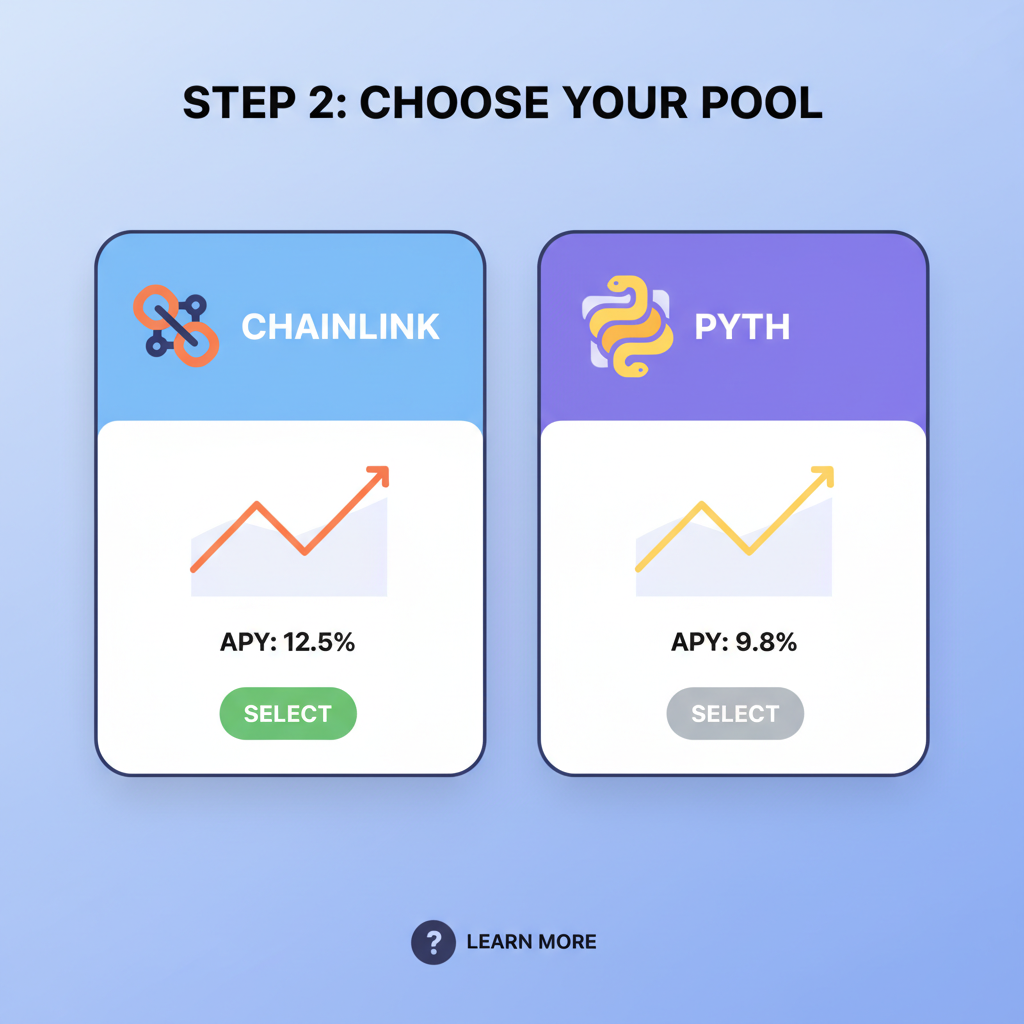
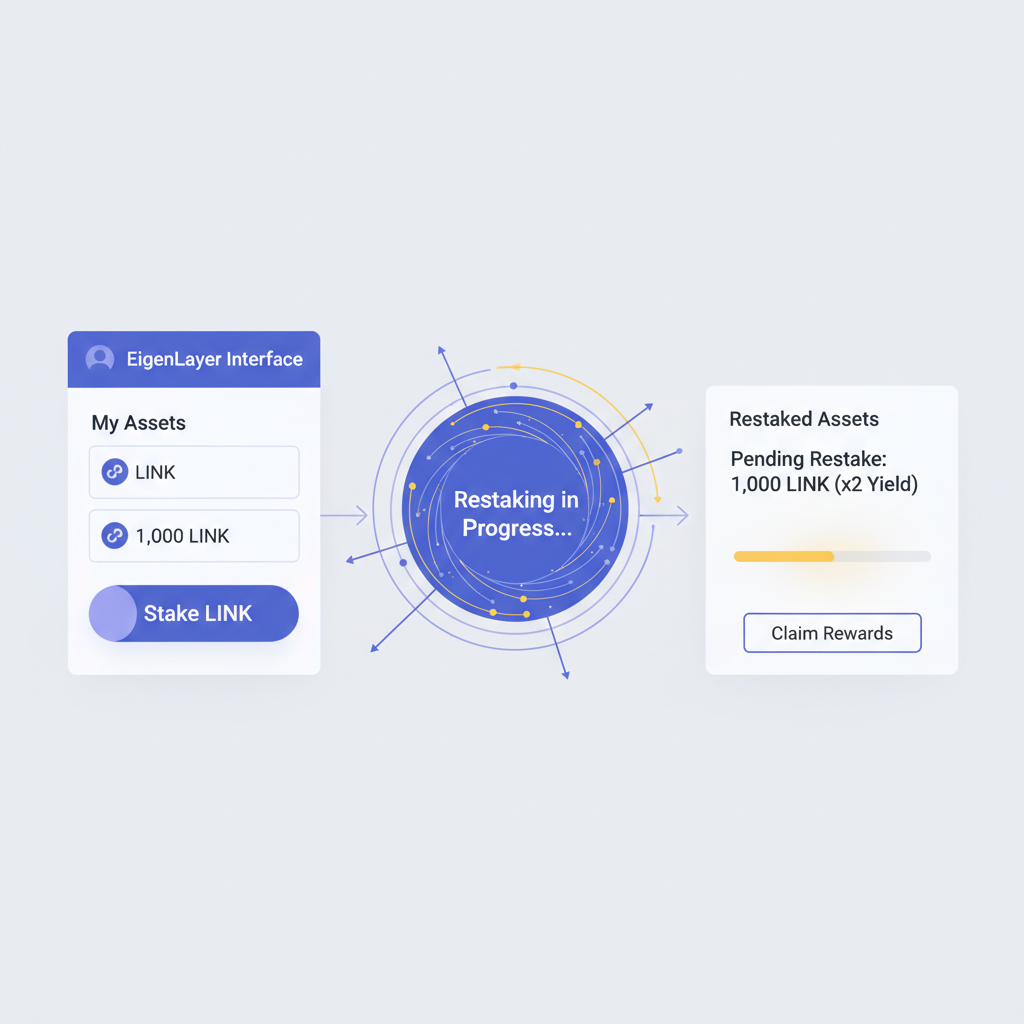
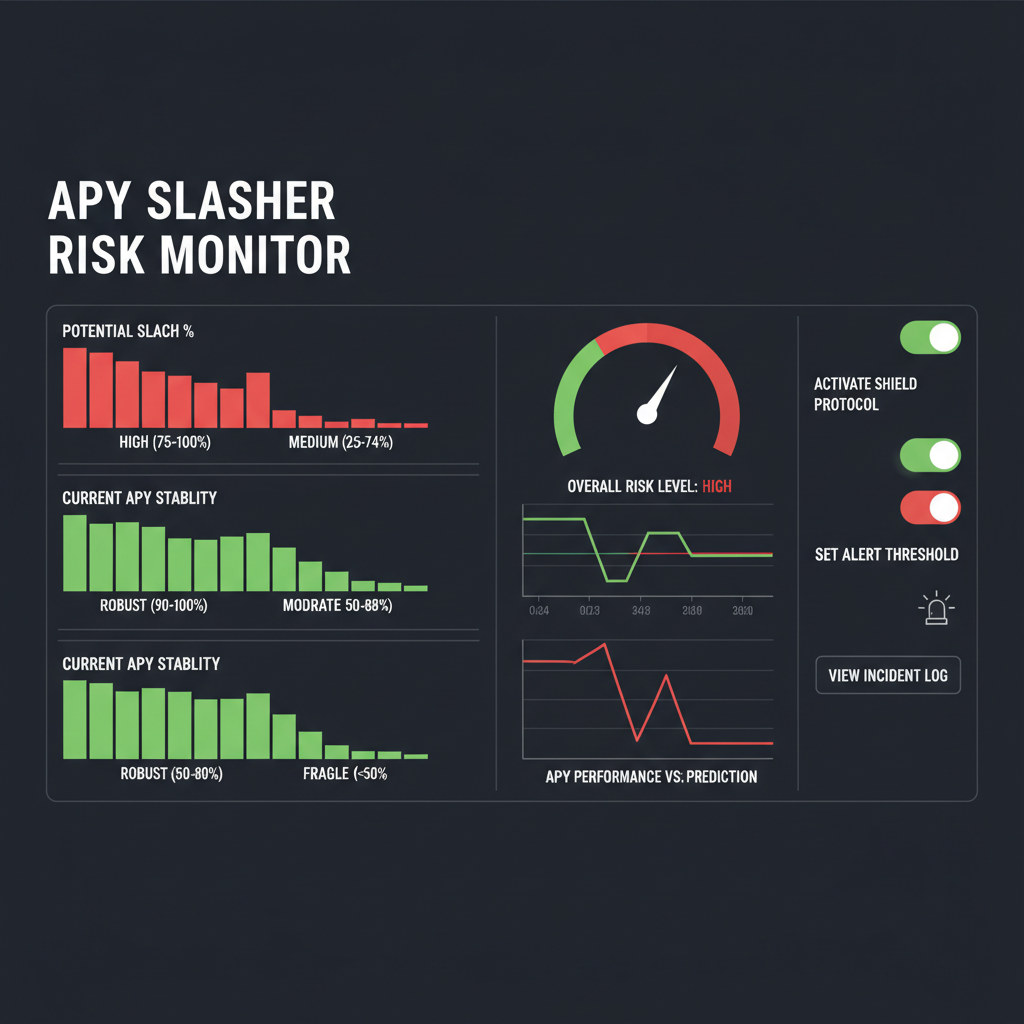
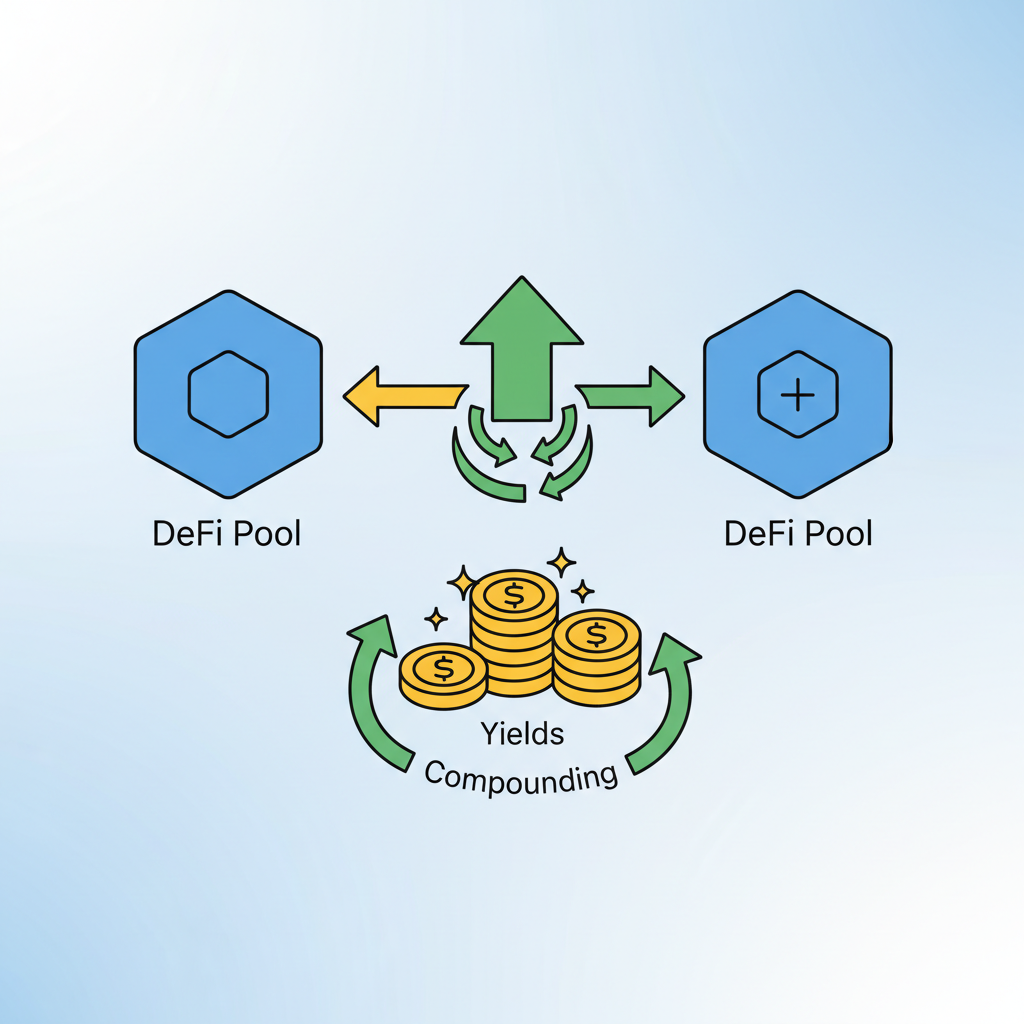
Slashing economics add nuance. Chainlink penalizes oracle downtime at 5-20% of stake, calibrated by service tier. Pyth ties penalties to feed staleness, incentivizing constant updates. Historical data post-beta shows minimal incidents, with Chainlink uptime at 99.98%. Yet, as TVL grows, correlated failures could amplify losses; restakers should cap exposure at 10% portfolio.
Projected Yields
| Metric | Chainlink APY | Pyth APY | Risks |
|---|---|---|---|
| Base Yield | 6-10% | 5-9% | Low 🟢 |
| Restaked Boost | +3% | +4% | Medium 🟡 |
| Slashing Risk | 1-5% annual | 2-6% annual | High 🔴 |
Risks and Resilience in Middleware Yields
Volatility persists: LINK's $8.68 and PYTH's $0.052004 reflect broader DeFi corrections, down 2.47% and 3.81% over 24 hours. Oracle restaking mitigates via overcollateralization, but centralization risks linger. Chainlink's node operator concentration contrasts Pyth's publisher diversity. On-chain metrics reveal Chainlink's 1,000 and nodes versus Pyth's 90 publishers, balancing decentralization against speed. For investors, this means monitoring operator stakes; yields compress if dominance erodes.
Regulatory headwinds add caution. As tokenization surges, oracles face scrutiny over data fiduciary duties. Chainlink's capital markets bridge positions it well, potentially lifting LINK beyond $8.68. Pyth's DeFi focus risks niche saturation. Balanced data: Lido's $10.2 billion TVL sets yield benchmarks at 3-5%; oracle restaking layers 2x multiples, per EigenLayer analogs.



Portfolio construction favors hybrids. Restake 50% native, 50% liquid via wrappers for liquidity. Track metrics like pool caps (Chainlink's 25 million LINK expanding) and integration counts (Pyth's 100 and chains). In chaotic markets, this harmony yields 8-15% net, outpacing vanilla staking. Oracle restaking elevates middleware from cost center to profit engine, securing DeFi's data layer while rewarding precision.
Forward metrics point upward. With asset tokenization projected to $10 trillion by 2030, oracle demand explodes. Chainlink's push model suits integrity; Pyth's pull excels velocity. At $8.68 and $0.052004, entry points tempt, but dollar-cost average amid dips. Diversified restaking across oracles harmonizes chaos, delivering resilient oracle network revenue in Web3's middleware evolution.



No comments yet. Be the first to share your thoughts!