
Map the integration value chain
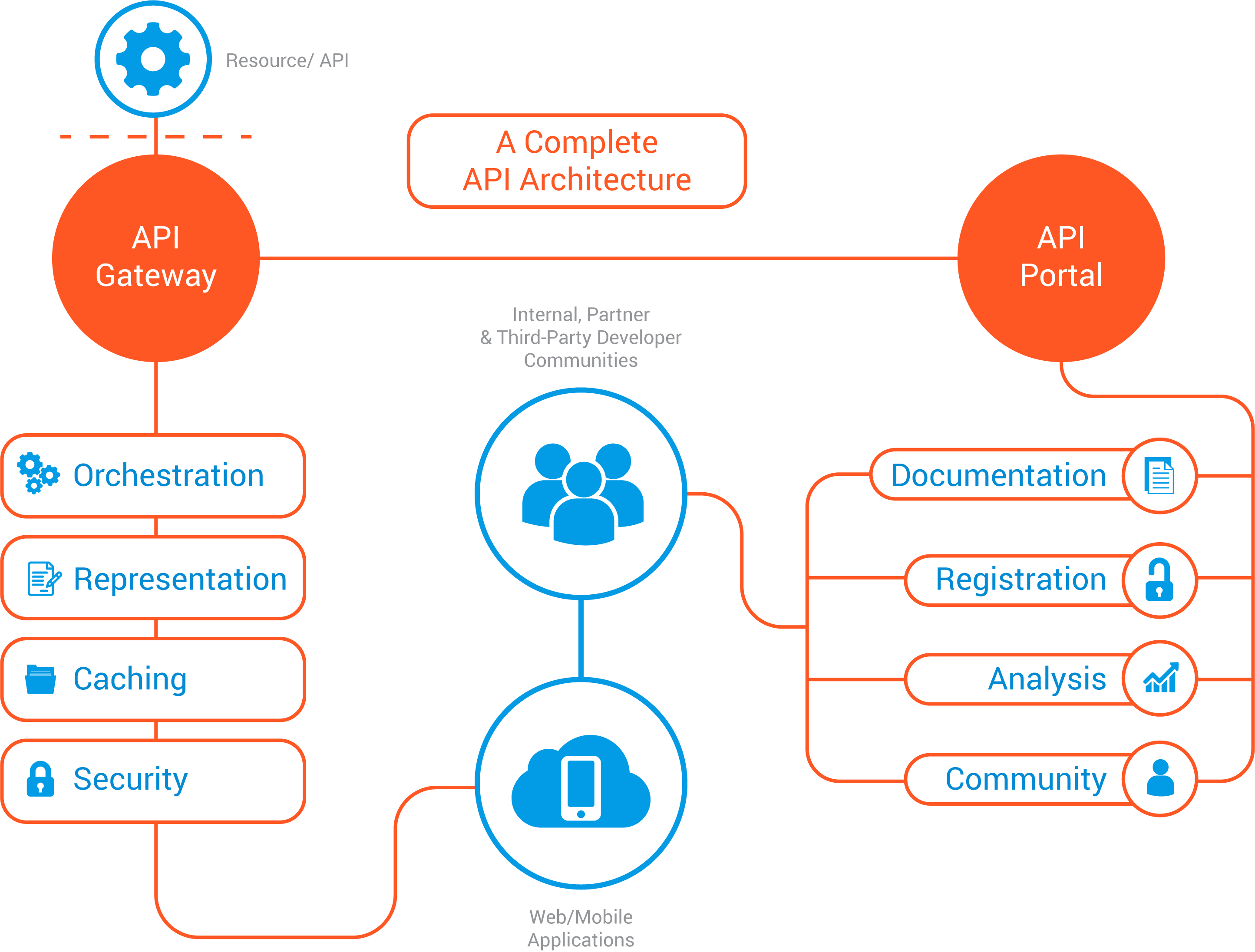
To price middleware effectively, you must first locate where your code sits in the data flow and quantify the specific value it adds to downstream consumers. Middleware functions as the central nervous system of API communication, intercepting requests before they reach the core application. This position allows you to enforce security, transform data, and manage traffic, but it also creates a dependency that downstream services must overcome if your layer fails.
Start by diagramming the path from the client to the final destination. Identify every handoff where your middleware intervenes. Common intervention points include authentication tokens, rate limiting checks, and payload transformations. Each intervention point represents a potential friction point that your middleware resolves. If your middleware reduces latency by caching responses or ensures compliance by masking sensitive data, these are your primary value metrics.
Quantify this value by measuring the cost of the problem you solve. If your middleware prevents a single failed transaction, calculate the lost revenue from that failure. If it accelerates data processing, estimate the engineering hours saved by downstream teams. Pricing models like revenue share or per-call fees work best when tied to these measurable outcomes. Without this clarity, you risk underpricing your infrastructure or overcomplicating your billing structure.
Select the API gateway revenue model
Choosing between usage-based, flat-rate, and hybrid API monetization models requires balancing your infrastructure costs against how customers perceive value. In 2026, the industry is shifting toward hybrid approaches that align pricing with actual consumption while retaining the stability of subscriptions (Revenera, 2026).
Usage-Based: Pay for What You Consume
Usage-based pricing charges customers based on API calls, data volume, or compute time. This model works best when your middleware costs are directly tied to transaction volume. It lowers the barrier to entry for new clients but creates revenue volatility for you.
- Best for: High-variability traffic patterns and developer-first products.
- Risk: Customers may optimize their code to reduce calls, shrinking your margin.
Flat-Rate: Predictable Subscription
Flat-rate pricing offers unlimited or tiered access for a fixed monthly fee. This approach simplifies billing and provides steady cash flow, making it easier to forecast operational expenses. However, it can become unprofitable if heavy users consume disproportionate resources.
- Best for: Stable, predictable workloads and enterprise contracts.
- Risk: Light users may overpay, while heavy users may underpay relative to their cost.
Hybrid: The 2026 Standard
Hybrid models combine a base subscription fee with overage charges for usage beyond a certain threshold. This structure captures recurring revenue while protecting margins during traffic spikes. It is increasingly viewed as the optimal balance for middleware platforms (SchematiHQ, 2026).
- Best for: Most B2B middleware services seeking both stability and scalability.
- Benefit: Aligns customer success with platform health.
| Model | Revenue Predictability | Customer Friction | Operational Complexity |
|---|---|---|---|
| Usage-Based | Low | High | High |
| Flat-Rate | High | Low | Low |
| Hybrid | Medium-High | Medium | Medium-High |
Configure billing and access controls
Middleware Monetization Strategies works best as a sequence, not a scramble through settings. Do the minimum first: confirm compatibility, connect the core hardware, update only when needed, and test the result before adding optional features. That order keeps the task understandable and makes failures easier to isolate. After each step, pause long enough for the interface to finish syncing. Many setup problems are timing problems disguised as configuration problems. If the same step fails twice, record the exact error, restart the smallest affected piece, and retry before moving deeper.
Structure enterprise SLA tiers
Package Service Level Agreements (SLAs) as a premium monetization lever for enterprise clients. Basic API access is a commodity; reliability and support are where the margin lives. By defining clear performance guarantees, you create distinct value tiers that justify higher pricing for businesses with critical uptime needs.
Define performance metrics and availability guarantees
Start by establishing the technical baselines that matter to enterprise operations. Uptime is the most common metric, but response time and throughput limits are equally important for high-volume users. Reference official documentation standards to ensure your definitions are consistent and defensible. Avoid vague promises like "fast response"; instead, use specific percentages such as 99.9% or 99.99% availability, backed by third-party monitoring tools.
Create tiered service levels
Structure your SLAs into clear tiers, such as Standard, Business, and Enterprise. Each tier should offer progressively stronger guarantees and higher support priorities. For example, a Standard tier might offer 99.9% uptime with email support during business hours, while an Enterprise tier guarantees 99.99% uptime with 24/7 dedicated account management and faster resolution times. This structure allows clients to self-select based on their risk tolerance and budget, simplifying the sales process.
Implement clear penalty clauses
Define explicit remedies for service failures. If you miss an uptime guarantee, the client should receive service credits or refunds. This transparency builds trust and reduces friction during contract negotiations. Ensure these clauses are legally sound and clearly communicated in the agreement. Avoid overly complex penalty structures that confuse clients or expose your business to excessive liability.
Document and communicate support channels
Clearly outline the support channels available for each tier. Enterprise clients expect direct access to technical experts, not just a general help desk. Specify response times for different severity levels (e.g., critical, high, medium, low). This clarity helps set expectations and ensures that high-value clients receive the attention they pay for.
Review and update SLAs regularly
Market expectations and technical capabilities evolve. Review your SLAs annually to ensure they remain competitive and aligned with your infrastructure improvements. Incorporate feedback from enterprise clients to refine metrics and support processes. Regular updates demonstrate your commitment to reliability and continuous improvement.
Avoid charging for throughput instead of value
Billing for raw data volume or API throughput is a common trap that penalizes high-efficiency users. When you charge per gigabyte or request count, you incentivize bloat rather than performance. A developer who optimizes their code to use less bandwidth gets charged the same as one sending redundant data, creating a perverse incentive against efficiency.
Instead, align your middleware monetization with the business outcome. Charge for successful transactions, validated records, or completed integrations. This approach rewards the value you deliver rather than the noise you process. It ensures your revenue scales with the customer's success, not just their data consumption.
Charging for throughput penalizes high-efficiency users. Charge for successful outcomes or data quality instead.
To implement this, configure your billing engine to track specific success metrics rather than raw volume. You must align technical enforcement with your chosen pricing model to ensure accurate measurement. This shift requires more sophisticated monitoring but builds a sustainable revenue foundation that customers perceive as fair.
Finalize your middleware monetization checklist
Before you launch, align your technical enforcement with your chosen pricing model. Middleware monetization relies on precise configuration to ensure billing and access controls function as intended. Use this checklist to verify your setup.
-
API Gateway Routing: Confirm that all endpoints are correctly routed and that the middleware intercepts traffic before it reaches the origin server.
-
Billing Integration: Verify that the payment processor is correctly mapped to the specific pricing tier (e.g., per-call, subscription, or tiered).
-
Access Control Lists (ACLs): Ensure that API keys and tokens are validated against your rate-limiting and quota policies.
-
Error Handling: Test that unauthorized or over-limit requests return the correct HTTP status codes (e.g., 401, 429) and clear error messages.
-
Logging and Analytics: Confirm that usage data is being captured accurately for invoicing and fraud detection.
-
SLA Monitoring: Set up alerts for latency spikes or downtime that could impact your service level agreements.
Do not rely on manual checks alone. Automate your testing pipeline to catch configuration drifts before they hit production.
Once these items are verified, your middleware monetization strategy is ready for scale. Regular audits will help you maintain accuracy as your API evolves.
Common questions about API monetization
Developers and product managers often stumble on the technical specifics of middleware monetization. The following questions address the most critical implementation details, focusing on aligning technical enforcement with your chosen pricing model.
How do I align technical enforcement with my pricing model?
You must configure billing and access controls to match your strategy. For usage-based middleware, implement real-time metering to track API calls accurately. For flat-fee or subscription models, focus on access control lists (ACLs) to restrict features. Misalignment here leads to revenue leakage or frustrated customers who cannot access paid features.
What happens if I miss an SLA target?
Service Level Agreements (SLAs) define uptime and latency guarantees. If middleware fails to meet these targets, standard practice involves issuing service credits to the client. Ensure your billing system automatically calculates these credits based on the severity and duration of the outage. Transparent SLA enforcement builds trust and reduces churn.
Should I use a hybrid pricing model for middleware?
Hybrid models combine a base subscription fee with overage charges for heavy usage. This approach stabilizes baseline revenue while allowing scalable growth from high-volume clients. Many 2026 strategies favor this because it balances predictable income with the flexibility of consumption-based pricing. Configure your gateway to handle both fixed and variable billing components seamlessly.
No comments yet. Be the first to share your thoughts!