
Map your middleware value chain
AI middleware sits between foundational models and end-user applications, facilitating communication, data flow, and orchestration [1]. To monetize this layer effectively, you must first define your specific position in the stack. Are you providing oracles, bridges, or data aggregation? The answer determines which costs are fixed and which are variable.
Distinguish fixed and variable costs
Your pricing model depends on where your middleware adds value. If you are building a bridge, your costs are heavily tied to infrastructure and bandwidth. If you are aggregating data, your costs scale with query volume and processing power. Understanding this split allows you to price for outcomes rather than just access, a key distinction in AI monetization [2].
Apply the 10-20-70 rule
When mapping your value chain, remember that technology is only part of the equation. The 10-20-70 rule suggests that 10% of efforts should focus on algorithms, 20% on technology and data, and 70% on people and processes [3]. For middleware, this means investing heavily in the operational processes that ensure reliability and uptime, as these are the primary drivers of customer trust and revenue.
Choose a value-aligned pricing model
Flat API fees no longer work for AI middleware. As customer demand shifts toward models that align with actual usage and business value, you must move beyond simple compute coverage. The goal is to price based on the outcome your middleware enables, not just the tokens or requests it processes.
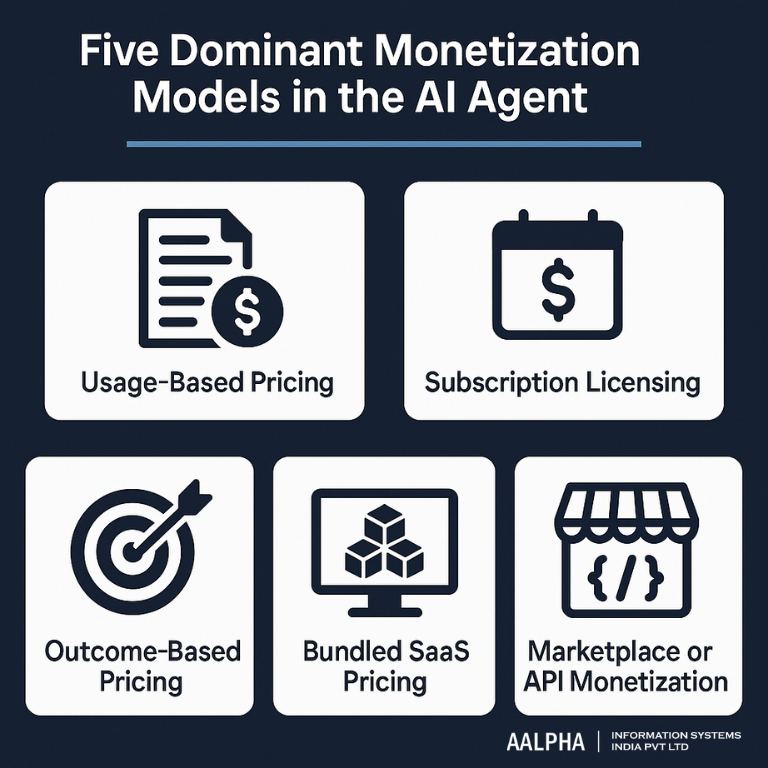
Start by identifying the three core pricing structures that dominate the current market. Each serves a different customer maturity level and risk tolerance.
| Pricing Model | Best For | Customer Risk | Revenue Potential |
|---|---|---|---|
| Flat API Fee | Simple, predictable workloads | Low | Low |
| Usage-Based | Variable traffic and scaling apps | Medium | Medium |
| Outcome-Based | High-value, result-oriented clients | High | High |
Flat API fees are the easiest to implement but leave money on the table. They work only when your middleware handles a static, low-volume workload. Most AI applications scale unpredictably, making this model unsustainable for growth.
Usage-based pricing aligns cost with consumption. This is the industry standard for agentic workflows and variable traffic. You must implement real-time metering to track tokens, API calls, or compute time accurately. Flexprice and similar platforms provide the infrastructure for this automated billing and metering.
Outcome-based pricing ties your fee to the business result, such as completed transactions or qualified leads. This carries the highest risk for you but offers the highest revenue potential. It requires deep integration with the client’s success metrics and is best reserved for enterprise clients with clear, measurable KPIs.
Prioritize usage-based models for 2026. They balance customer trust with your need for scalable revenue. Reserve outcome-based pricing for strategic partnerships where you can confidently guarantee value.
Implement real-time usage metering
To monetize AI middleware effectively, you must track consumption the moment it happens. Real-time usage metering captures every token, API call, or compute cycle as it occurs, creating an accurate ledger for billing. Without this infrastructure, you risk revenue leakage or inaccurate customer invoices, which erodes trust and margins.
Follow these steps to build a robust metering pipeline that scales with your middleware architecture.
Embed lightweight SDKs or sidecars at your API gateway entry points. These instruments intercept requests before they reach the AI model, capturing metadata such as user ID, model type, and input/output token counts. This ensures no transaction goes unrecorded, regardless of traffic volume.
Instead of writing directly to a billing database, stream metering events to a high-throughput time-series database like TimescaleDB or InfluxDB. This decouples the recording process from your core application logic, preventing latency spikes during peak usage and ensuring data integrity even if billing systems are temporarily unavailable.
Set up scheduled jobs to aggregate raw event data into monthly or hourly buckets aligned with your pricing tiers. Group these aggregates by customer ID and service endpoint. This aggregation layer transforms raw telemetry into billable units, allowing you to apply complex pricing rules—such as volume discounts or tiered rates—without recalculating every single transaction at invoice time.
Implement automated reconciliation checks to compare metered usage against model provider logs (e.g., OpenAI or Azure AI) where available. Discrepancies often arise from retries or failed requests that still consume compute. Flagging these mismatches early prevents billing errors and provides a clear audit trail for customer disputes.
Accurate metering is the foundation of variable-cost AI middleware. As noted by industry solutions like Flexprice, successful AI monetization requires this real-time infrastructure to support flexible pricing models and automated billing. Without it, you cannot reliably scale your revenue operations.
Automate billing and revenue recognition
Connecting metering data to billing systems transforms raw API usage into accurate invoices and compliant revenue recognition. This step reduces operational overhead by eliminating manual reconciliation and ensuring that every token, request, or compute unit is accounted for before the bill is sent.
Define a single source of truth for usage data. Middleware must normalize disparate model outputs (e.g., tokens per model, latency, error rates) into a unified schema. This ensures that billing engines receive consistent, structured data regardless of which AI model was called. Without this standardization, billing errors accumulate as usage scales.
Set up automated workflows that trigger invoice generation based on usage thresholds or billing cycles. Instead of batch processing at month-end, use real-time event streams to update customer balances. This approach, supported by platforms like Oracle Monetization Suite, allows for dynamic pricing adjustments and immediate visibility into revenue accruals.
Map usage events to revenue recognition rules (ASC 606 / IFRS 15). Middleware should tag each usage event with the correct service performance obligation. This automation ensures that revenue is recognized as services are delivered, not just when cash is received, providing accurate financial reporting for stakeholders.
Run automated reconciliation checks to compare metered usage against billing calculations. Flag discrepancies for review before invoices are generated. This final quality control step prevents customer disputes and ensures that the final invoice matches the actual value delivered by the AI services.
-
Define a unified usage schema for all AI models
-
Configure real-time billing triggers for immediate balance updates
-
Map usage events to ASC 606 revenue recognition rules
-
Run automated reconciliation checks before invoice generation
Zuora notes that AI monetization mechanics differ significantly from traditional SaaS, requiring flexible pricing models that can handle variable compute costs and unpredictable usage patterns. Automating this flow ensures your billing system can adapt to these nuances without manual intervention.
Avoid common pricing pitfalls
Pricing AI middleware requires a different mindset than traditional software. If you price for access rather than outcomes, you invite churn and margin erosion. Bessemer Venture Partners notes that AI pricing strategy isn't like SaaS; successful models price for outcomes, not access [[src-serp-8]].
Underpricing complex inference
Inference costs are volatile and often higher than expected. Many founders underprice their base tiers, assuming steady state costs that rarely exist. If your inference cost spikes during peak usage, your margins vanish instantly.
Calculate the true cost per token or per API call, including latency and fallback models. Build a buffer into your unit economics, or switch to usage-based pricing that scales with actual consumption.
Overcomplicating the structure
Customers reject complex pricing. If your tiers require a spreadsheet to understand, you will lose deals. Simplicity drives conversion. Offer three clear options: a free tier for testing, a standard tier for core needs, and an enterprise tier for scale.
Use the Bessemer playbook approach: tie price directly to the value delivered. If the AI saves the customer $10,000, charging $500 is easy to justify. Charging $500 for "10,000 API calls" is not.
Ignoring model switching costs
AI models change rapidly. New versions arrive monthly with better performance and lower costs. If you lock customers into a specific model or tier, you limit your ability to optimize. Allow flexible model switching within tiers, or offer credits that adjust as model costs change.
This flexibility protects your margins while keeping customers happy. They get the best performance for their price, and you avoid the headache of managing multiple static pricing tables.
Frequently asked questions about AI middleware monetization
What is AI middleware?
AI middleware is the horizontal software layer that sits between foundational AI models and the end-user applications that rely on them. It acts as the traffic controller, facilitating communication, data flow, and orchestration between the AI engine and the rest of your software stack. Without this layer, integrating complex models into existing business workflows becomes fragmented and inefficient.
What is the AI monetization strategy?
AI monetization is the specific set of business models, pricing structures, and operating systems that turn AI capabilities into revenue. Unlike traditional SaaS, which often relies on flat subscription tiers, AI monetization must account for variable compute costs and usage-based value. The goal is to align pricing with the actual ROI the middleware delivers to the enterprise client.
What is the 10-20-70 rule for AI?
The 10-20-70 rule highlights where resources should be allocated for successful AI integration. According to research by Boston Consulting Group, only 10% of effort should go toward algorithms, 20% toward technology and data, and the remaining 70% toward people and processes. This means your monetization strategy must prioritize change management and user adoption over pure technical development.
No comments yet. Be the first to share your thoughts!