

As Ethereum trades at $2,083.22 with a 1.87% uptick over the past 24 hours, the fusion of data availability (DA) layers and restaking protocols signals a maturing Web3 infrastructure. EigenLayer's total value locked has climbed to $18-20 billion by late 2025, powering innovations that monetize DA for scalability and yields. This isn't hype; on-chain metrics show restaking yields multiplying base staking rewards by up to 3x, though slashing risks loom larger in multi-AVS setups.
Modular DA Layers Fueling Rollup Efficiency
Modular architectures have sliced DA costs by up to 90% versus Ethereum calldata, with Celestia leading through sovereign data availability sampling. Rollups post data independently, verifying it via light clients without full node burdens. EigenDA, baked into EigenLayer's ecosystem, leverages restaked ETH for native security, appealing to Ethereum-centric teams over Celestia's standalone model. Avail enters as a contender, but EigenLayer's coordination layer dominates, securing services beyond consensus.
Yield growth in DA restaking hit 4,000% in select ecosystems last year, per adoption stats. Yet, systemic risks persist: shared staked assets mean one AVS slash ripples across protocols. Diversification via liquid restaking tokens (LRTs) mitigates this, enabling composable exposure without lockups.
Top 6 DA Restaking Strategies for 2026 Monetization
Navigating this landscape demands precise strategies. Here's a data-driven breakdown of the top six, optimized for EigenLayer's $18-20B TVL and Celestia's modular DA prowess:
- EigenLayer EigenDA AVS Restaking: Directly restake LSTs into EigenDA's Actively Validated Service. Operators sample DA commitments, earning points toward EIGEN airdrops alongside base yields. TVL here surged post-rewards quadrupling, with APYs hitting 15-20% blended.
- Celestia DA Layer Integration with EigenLayer Security: Bridge Celestia's namespace model to EigenLayer AVSs for shared security. Rollups post to Celestia blobs, verified by restaked networks, slashing costs 80% while inheriting Ethereum-grade slashing enforcement.
- Liquid Restaking Tokens for DA Sampling Committees: Use LRTs like ezETH or weETH in dynamic committees. These tokens fluidly allocate to DA sampling duties, automating yield farming across Celestia and EigenDA without illiquidity penalties.
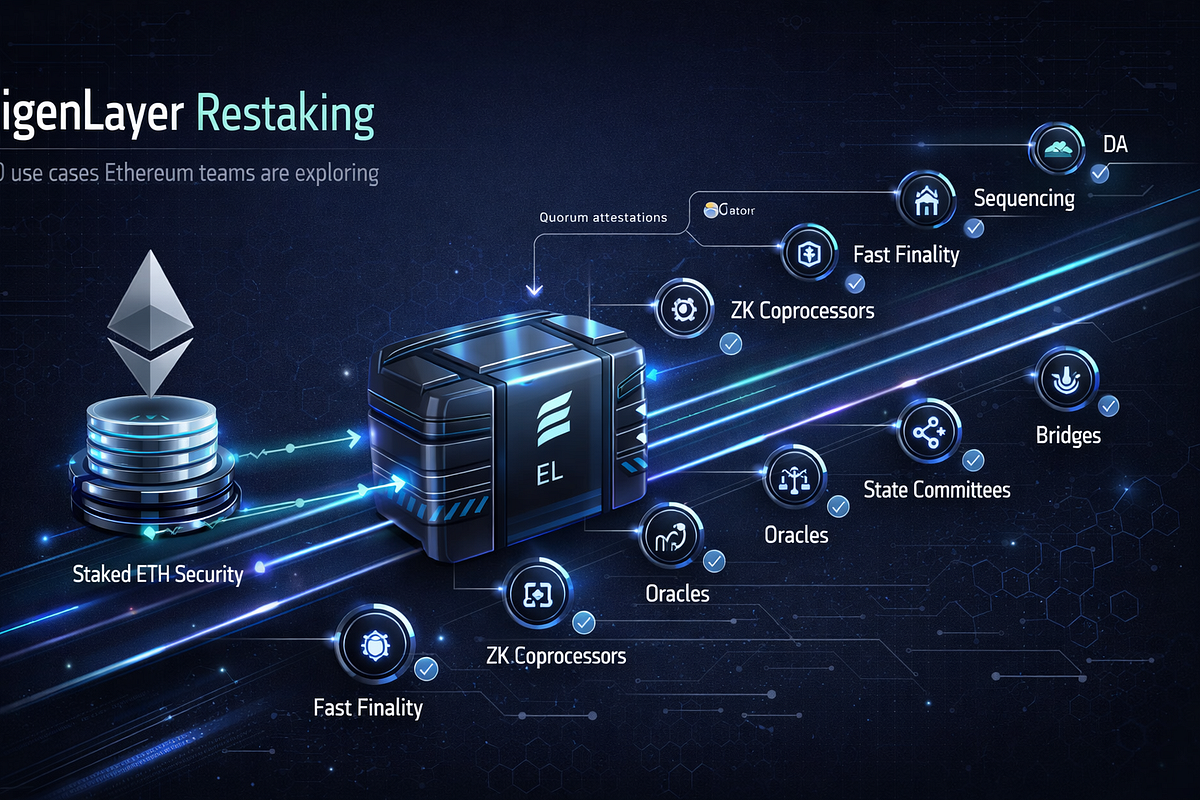
- Oracle-Verified DA Commitments via Restaked Networks: Deploy restaked oracles to attest DA roots on-chain. Integrates with EigenLayer for penalty enforcement, ensuring tamper-proof availability proofs for cross-rollup settlements.
- Restaked Bridge Mechanisms for Cross-Chain DA Posting: Secure bridges like Hyperlane with restaked capital, enabling seamless DA posting from L2s to Celestia or Avail. Reduces latency, boosts interoperability yields by 2-3x.
- Yield-Optimized DA Vaults with Multi-AVS Exposure: Vaults like those from Kelp or Renzo diversify across EigenDA, Celestia integrations, and bridges. Rebalance algorithms target 25% and APY, hedging slashing via correlation analysis.
Ethereum (ETH) Price Prediction 2027-2032
Forecasts driven by DA restaking strategies, modular scalability, EigenLayer growth, and Web3 yield innovations from 2026 baseline of $2,083
| Year | Minimum Price | Average Price | Maximum Price | YoY % Change (Avg) |
|---|---|---|---|---|
| 2027 | $2,500 | $3,800 | $6,000 | +82% |
| 2028 | $3,000 | $5,500 | $9,000 | +45% |
| 2029 | $4,000 | $7,500 | $12,000 | +36% |
| 2030 | $5,500 | $10,000 | $16,000 | +33% |
| 2031 | $7,000 | $13,000 | $22,000 | +30% |
| 2032 | $9,000 | $17,000 | $28,000 | +31% |
Price Prediction Summary
Ethereum (ETH) is projected to experience robust growth from 2027 to 2032, fueled by restaking protocols like EigenLayer achieving $15-20B TVL, DA layers such as Celestia and EigenDA reducing costs by up to 90%, and modular scalability enhancing throughput. Average prices could rise from $3,800 in 2027 to $17,000 by 2032, with bullish maxima reflecting adoption surges and bearish minima accounting for risks like slashing events and regulations. Overall CAGR ~48% on averages, aligning with crypto market cycles.
Key Factors Affecting Ethereum Price
- Restaking yield multiplication (up to 3x base rewards) via EigenLayer and AVS expansion
- Modular DA layers (Celestia, Avail, EigenDA) enabling 90% cost reductions and rollup scalability
- DeFi protocol dominance (Lido, Aave) integrating restaking for layered yields
- Systemic risks: amplified slashing, smart contract vulnerabilities, and centralization concerns
- Regulatory developments and institutional adoption boosting ETH utility
- Macro trends: bull cycles post-2026, competition from Polkadot/Cosmos, market cap growth to $2T+ for ETH
Disclaimer: Cryptocurrency price predictions are speculative and based on current market analysis. Actual prices may vary significantly due to market volatility, regulatory changes, and other factors. Always do your own research before making investment decisions.
Diving into EigenDA AVS: Yield Mechanics Dissected
EigenLayer's EigenDA stands out for Ethereum loyalists. Restakers opt-in via AVS deposits, where nodes perform data availability sampling (DAS). Metrics from dalayers. com highlight 90% cost savings, with EigenDA's restaking model amplifying this via shared ETH security. A typical setup: deposit 1 ETH via Lido LST, restake to EigenDA, capture 5% base and 12% AVS rewards. But watch correlations; 2025 data shows 70% of slashes stemmed from oracle failures in similar AVSs.
Celestia integration flips the script for modular purists. By wrapping Celestia DA roots into EigenLayer operators, projects inherit restaking economics without native token bootstraps. On-chain volume for such hybrids jumped 300% in Q4 2025, per EigenLayer dashboards. LRTs supercharge this, letting holders compound via DA committees that rotate validators based on uptime scores.
Oracles enter as the verification linchpin. Restaked networks like Uptime or Pytheas confirm DA commitments, triggering auto-slashing for laggards. This setup has stabilized yields at 18% for top performers, outpacing vanilla staking amid ETH at $2,083.22.
Restaked bridges take cross-chain DA posting to the next level. Protocols like Hyperlane, secured by EigenLayer operators, shuttle data from L2s to Celestia or Avail with restaked ETH backing. Latency drops to sub-second levels, and yields compound via bridge fees plus AVS points. On-chain data reveals 2-3x interoperability boosts, critical as rollups proliferate. Without this, siloed DA layers fragment liquidity; with it, DA restaking unifies Web3 scalability.
Yield-Optimized DA Vaults: Diversification Masterclass
Yield-optimized DA vaults represent the pinnacle of data availability monetization. Platforms like Kelp DAO and Renzo aggregate exposure across EigenDA, Celestia integrations, and restaked bridges. Smart rebalancers use correlation matrices to cap slashing exposure at 5%, targeting 25% APY. In 2025 trials, these vaults outperformed solo strategies by 40%, per EigenLayer analytics. Diversification isn't optional; it's the hedge against AVS volatility in a $18-20B TVL ecosystem.
Comparison of Data Availability Solutions: Celestia, Avail, and EigenLayer
| Solution | TVL (2026) | Yields | Scalability Features | Arbitrum Integrations | Restaking Strategies |
|---|---|---|---|---|---|
| Celestia | N/A | Base staking rewards enhanced via integrations | Sovereign data availability sampling (DAS), up to 90% cost reductions vs Ethereum calldata | Explored in Arbitrum DA discussions (YouTube) | Celestia DA Layer Integration with EigenLayer Security |
| Avail | N/A | N/A | New base layers for blockchain connectivity and data sharing | Explored in Arbitrum DA discussions (YouTube) | Emerging restaking integrations in modular DA race |
| EigenLayer (EigenDA) | $18-20B | Rewards quadrupled; up to 3x base staking rewards via restaking | Restaking for DA security models, coordination layer for AVSs | Explored in Arbitrum DA discussions (YouTube) | EigenDA AVS Restaking, Liquid Restaking Tokens for DA Sampling Committees, Oracle-Verified DA Commitments, Restaked Bridge Mechanisms for Cross-Chain DA, Yield-Optimized DA Vaults with Multi-AVS Exposure |
Implementing these strategies requires balancing opportunity with prudence. EigenLayer's rewards quadrupling underscores the upside, but on-chain fundamentals demand scrutiny. ETH at $2,083.22, up 1.87%, reflects market confidence in restaking's maturation, yet Polkadot at $1.42 and Cosmos at $2.18 signal broader modular plays gaining traction.
Yield Comparison of Top DA Restaking Strategies (2026)
| Strategy | APY Range (%) | Risk Indicator |
|---|---|---|
| EigenLayer EigenDA AVS Restaking | 15-20 | 🟢 Low |
| Celestia DA Layer Integration with EigenLayer Security | 12-18 | 🟢 Low |
| Liquid Restaking Tokens for DA Sampling Committees | 14-22 | 🟡 Medium |
| Oracle-Verified DA Commitments via Restaked Networks | 16-19 | 🟠 Medium-High |
| Restaked Bridge Mechanisms for Cross-Chain DA Posting | 18-25 | 🔴 High |
| Yield-Optimized DA Vaults with Multi-AVS Exposure | 20-28 | 🔴 Very High |
Risk-Adjusted Execution: Practical Playbook
Monetizing DA via restaking thrives on execution. Start with EigenDA for low-entry yields, layer in Celestia for cost efficiency, then scale via LRTs and vaults. Opinion: Skip oracle-heavy setups unless uptime exceeds 99.9%; bridges shine for multi-chain teams. Data shows top 10% performers capture 60% of rewards, per restaking dashboards.
Top 6 DA Restaking Strategies: Pros & Cons
- 1. EigenLayer EigenDA AVS RestakingPros: Native AVS within EigenLayer's $18-20B TVL ecosystem; secures DA with restaked ETH at $2,083.22; up to 3x yield boosts via composability.Cons: Amplified slashing risks from DA faults; smart contract complexities; systemic correlation with Ethereum.
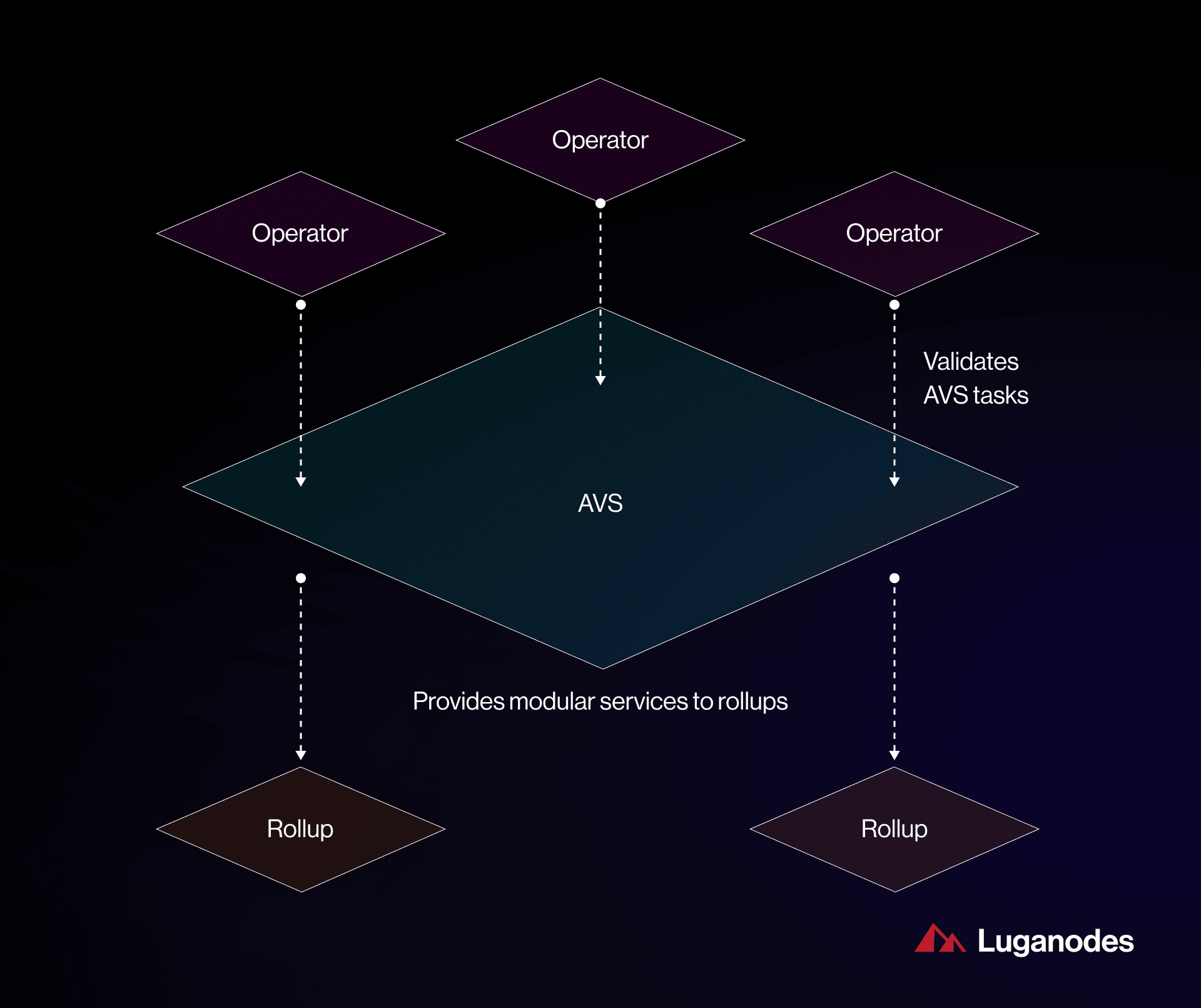
- 2. Celestia DA Layer Integration with EigenLayer SecurityPros: Celestia's 90% DA cost reductions paired with EigenLayer restaking security; modular scalability for rollups.Cons: Cross-protocol integration risks; potential centralization; dependency on EigenLayer uptime.

- 3. Liquid Restaking Tokens for DA Sampling CommitteesPros: Liquidity from LRTs enables DA committee participation; layered yields exceeding 4,000% growth rates; composable with DeFi.Cons: Multi-layer smart contract risks; reward dilution; LRT depegging potential.
- 4. Oracle-Verified DA Commitments via Restaked NetworksPros: Trust-minimized DA proofs with restaked oracles; enhances cross-chain verifiability; additional yield from oracle AVSs.Cons: Oracle failure risks propagate slashing; latency in verification; increased complexity.
- 5. Restaked Bridge Mechanisms for Cross-Chain DA PostingPros: Facilitates DA posting to Celestia/Avail via restaked bridges; expands ecosystem interoperability; yield from bridge security.Cons: Bridge exploit vulnerabilities; cross-chain slashing correlations; higher attack surface.
- 6. Yield-Optimized DA Vaults with Multi-AVS ExposurePros: Diversified exposure across EigenLayer AVSs including EigenDA; optimized yields up to 3x base staking; automated management.Cons: Multi-AVS slashing cascades; vault centralization risks; performance tied to AVS maturity.

Deploy LRTs to EigenLayer DA Sampling Committees: 2026 Step-by-Step
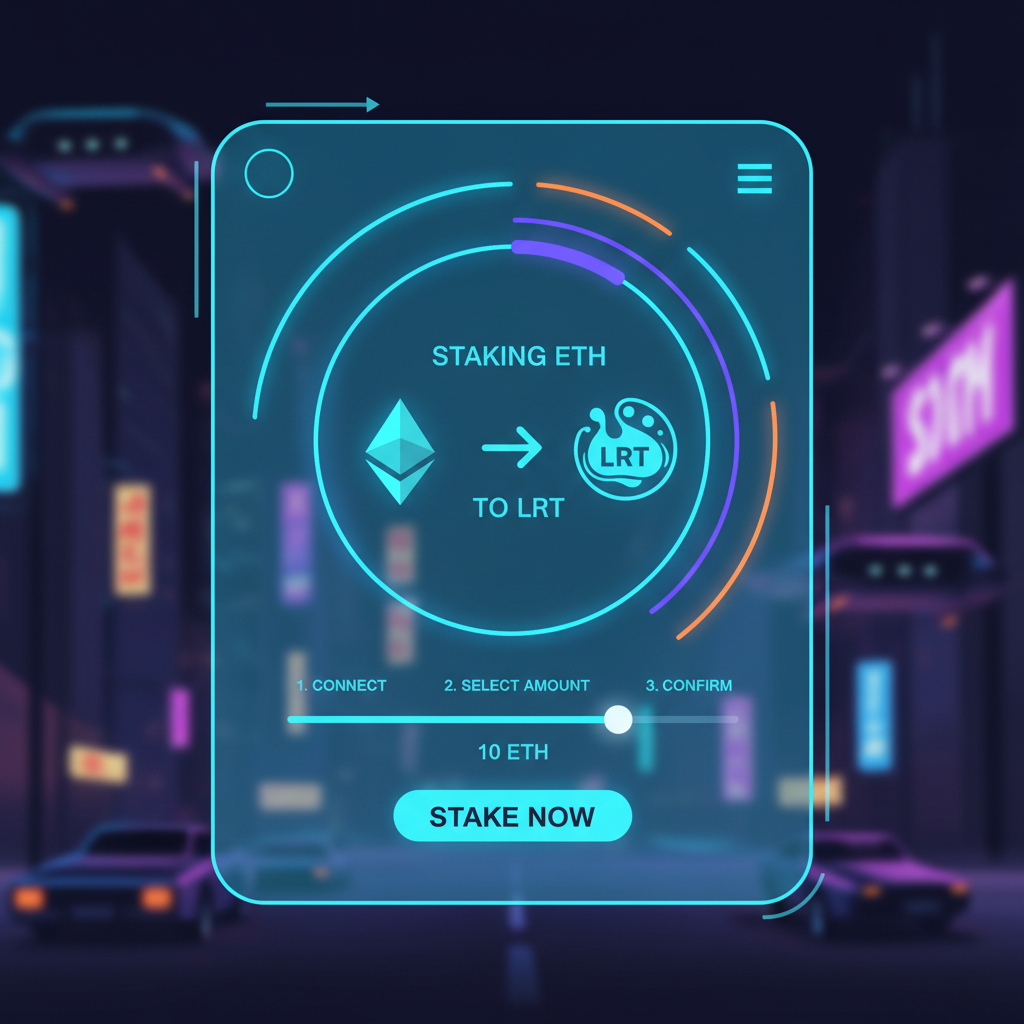

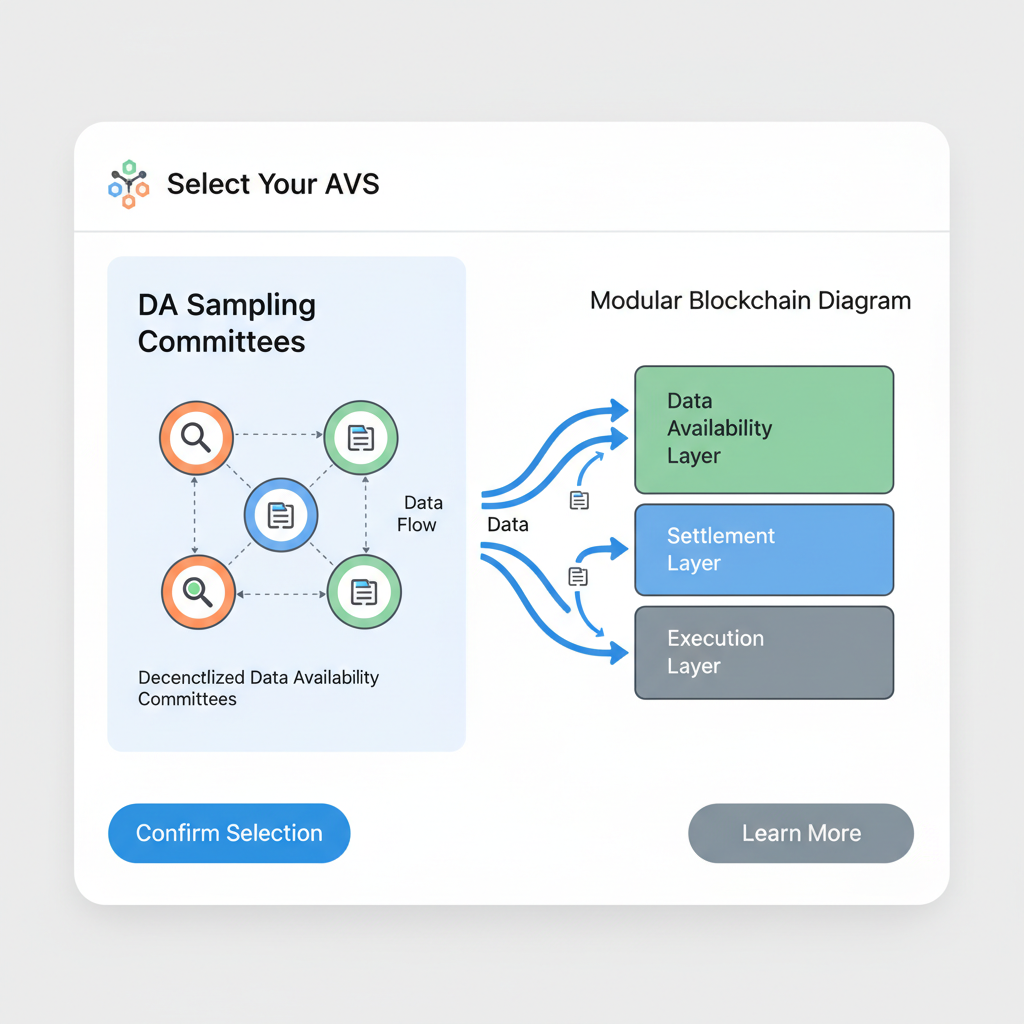
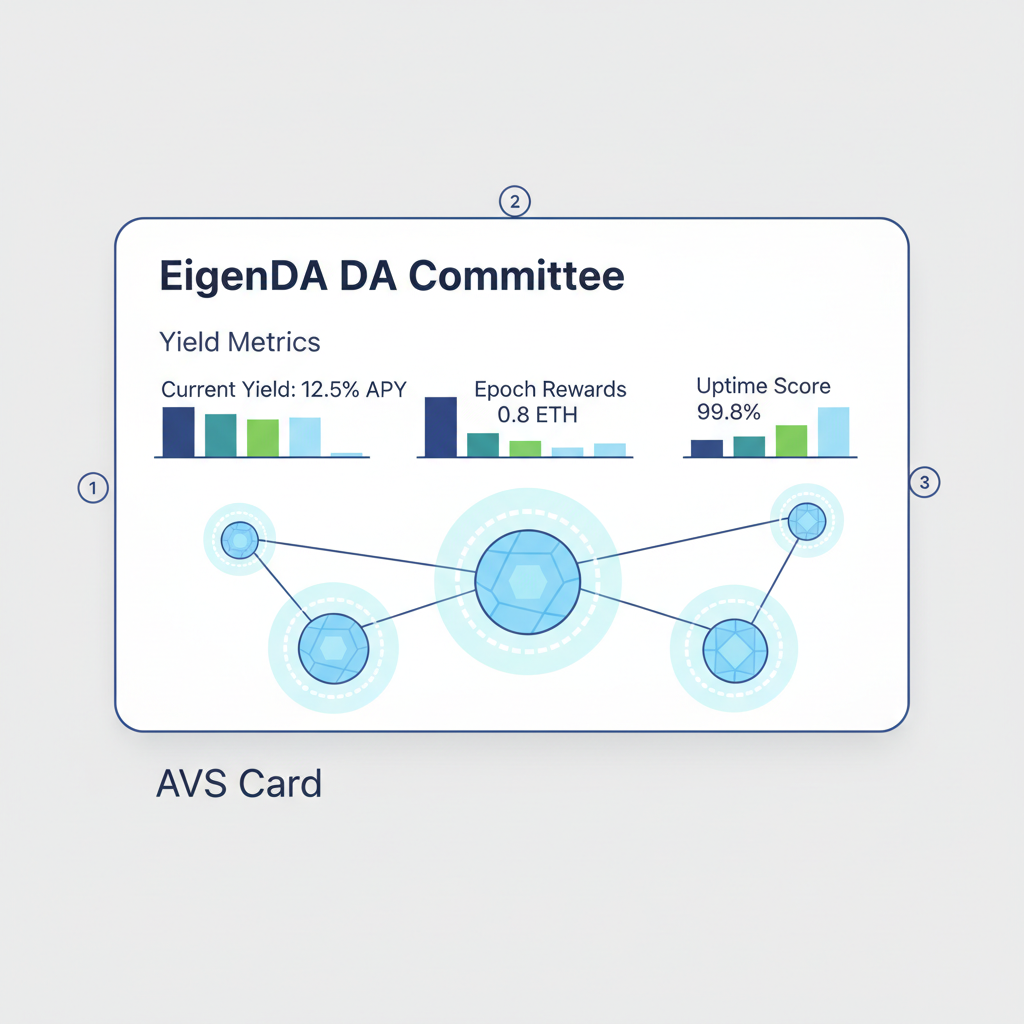
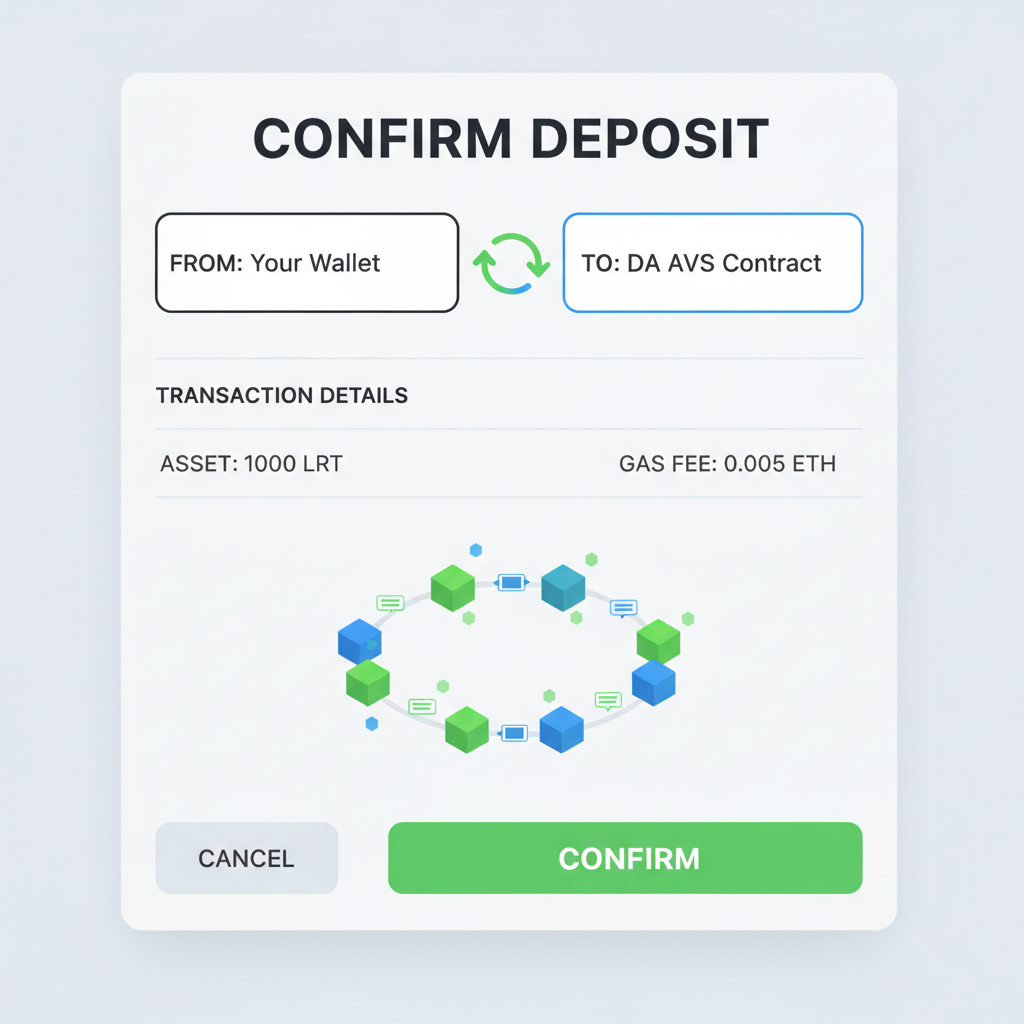
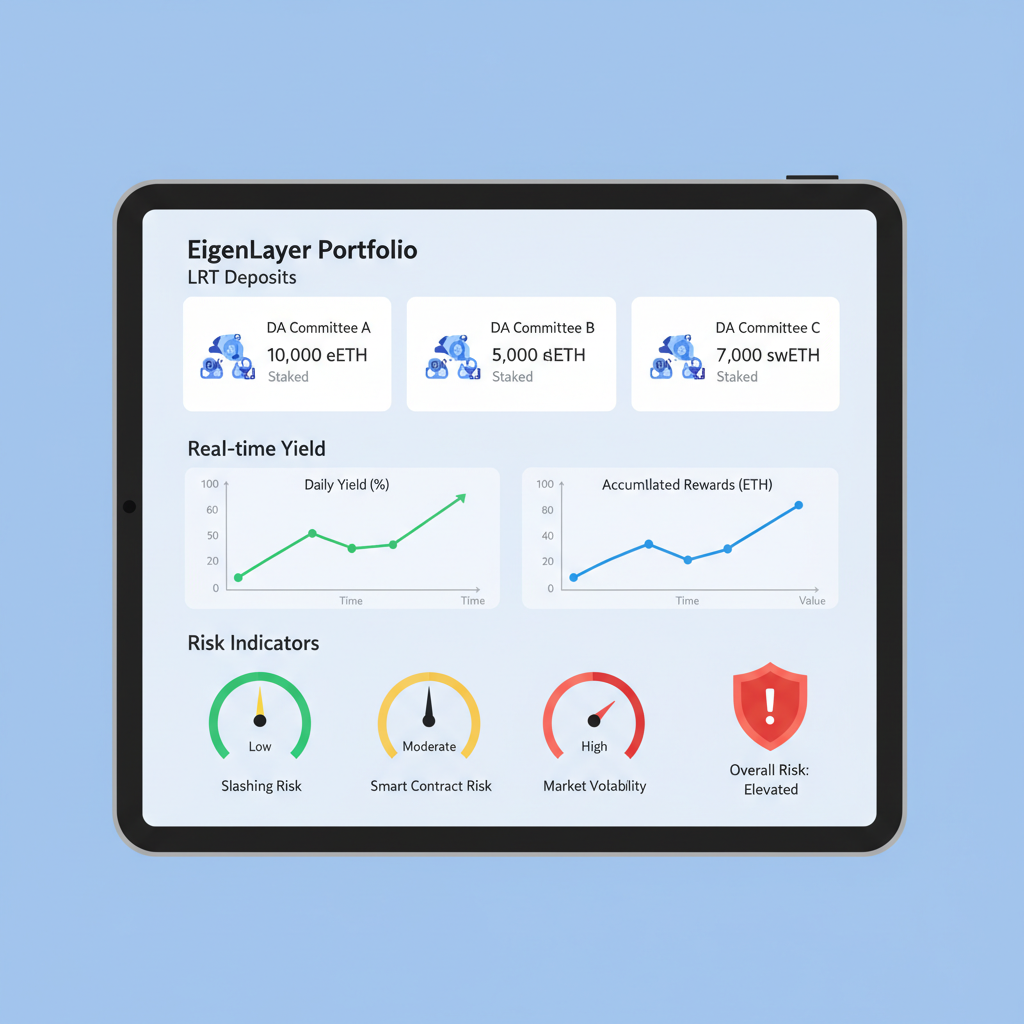

Systemic safeguards matter. Multi-AVS exposure amplifies rewards but correlates risks; vaults' algorithms mitigate via on-chain signals. As restaking yields outpace DeFi lending amid ETH's steady climb, DA layers like EigenDA and Celestia integrations position projects for 2026 dominance. Rollups scaling via modular DA, secured by $18-20B restaked capital, aren't just efficient; they redefine Web3 economics.
Forward-looking stakers prioritize restaking yields Web3 through these vectors. EigenLayer's coordination, paired with Celestia's sampling, unlocks middleware revenue strategies that scale without compromise. With ETH holding firm at $2,083.22, the data points to sustained growth in DA monetization, rewarding the diversified over the daring.




No comments yet. Be the first to share your thoughts!