
Define your middleware value
Middleware is not just plumbing; it is the value-add layer that justifies a price tag. Before building technical infrastructure, you must identify the specific business value your integration layer provides. This includes reducing latency, ensuring compliance, or enabling seamless data transformation.
Payment middleware, for example, allows software to accept payments, sync with ERPs, and communicate with multiple gateways. This unseen layer supports seamless integration between payment methods like ACH, cards, and digital wallets. By handling this complexity, you save developers time and reduce errors, which directly translates to cost savings for your clients.
To achieve maximum ROI, focus on the problems your middleware solves. Are you simplifying compliance? Reducing transaction failures? Once you can articulate these benefits in business terms, you can structure your pricing model around the value delivered, not just the infrastructure used.
Choose a pricing model
Middleware APIs rarely fit a single billing structure. The right model depends on how your customers consume data and whether their usage is predictable. Most middleware providers settle on three dominant approaches: subscription, usage-based, or tiered pricing.
Subscription pricing
Subscription billing charges a flat monthly or annual fee for access. This model works best when your middleware provides stable, high-value connectivity that customers need regardless of volume. It offers predictable revenue for you and predictable costs for the buyer. However, it can discourage growth if heavy users feel they are overpaying for unused capacity.
Usage-based pricing
Usage-based billing charges customers strictly for what they consume, typically per API call or per gigabyte of data processed. This aligns costs directly with value, making it ideal for high-volume or variable traffic patterns. It lowers the barrier to entry for new customers but requires robust metering infrastructure to track and bill accurately. Without precise tracking, you risk revenue leakage or billing disputes.
Tiered pricing
Tiered pricing combines elements of both by offering fixed packages with increasing limits (e.g., Basic, Pro, Enterprise). This structure simplifies decision-making for buyers while allowing you to upsell as they grow. It is effective for middleware that serves diverse customer segments with different needs. The downside is complexity in managing entitlements and ensuring each tier delivers distinct value.
| Model | Revenue Predictability | Best For | Primary Risk |
|---|---|---|---|
| Subscription | High | Stable, high-value connectivity | Stifling heavy user growth |
| Usage-based | Low | Variable, high-volume traffic | Metering complexity and leakage |
| Tiered | Medium | Diverse customer segments | Tier overlap and support burden |
Implement metering and billing
To monetize middleware APIs effectively, you must instrument your stack to track usage accurately. This prevents revenue leakage and ensures every API call, data byte, or compute second is accounted for. The following steps outline the technical implementation for adding entitlement checks, setting up metering logs, and centralizing pricing data.
Integrate entitlement checks directly into your middleware layer before the request reaches the core business logic. This ensures that only authorized users or plans can access specific endpoints. By validating permissions early, you prevent unauthorized usage from consuming resources or generating unbillable traffic. This step acts as the first line of defense, filtering out invalid requests before they incur any cost.
Configure your middleware to emit metering data as asynchronous events or structured logs. This approach ensures that the billing process does not block the main request thread, maintaining low latency for your API consumers. Track key metrics such as the number of API calls, data volume transferred, and compute time used. Storing this data asynchronously allows for high-volume processing without impacting the user experience.
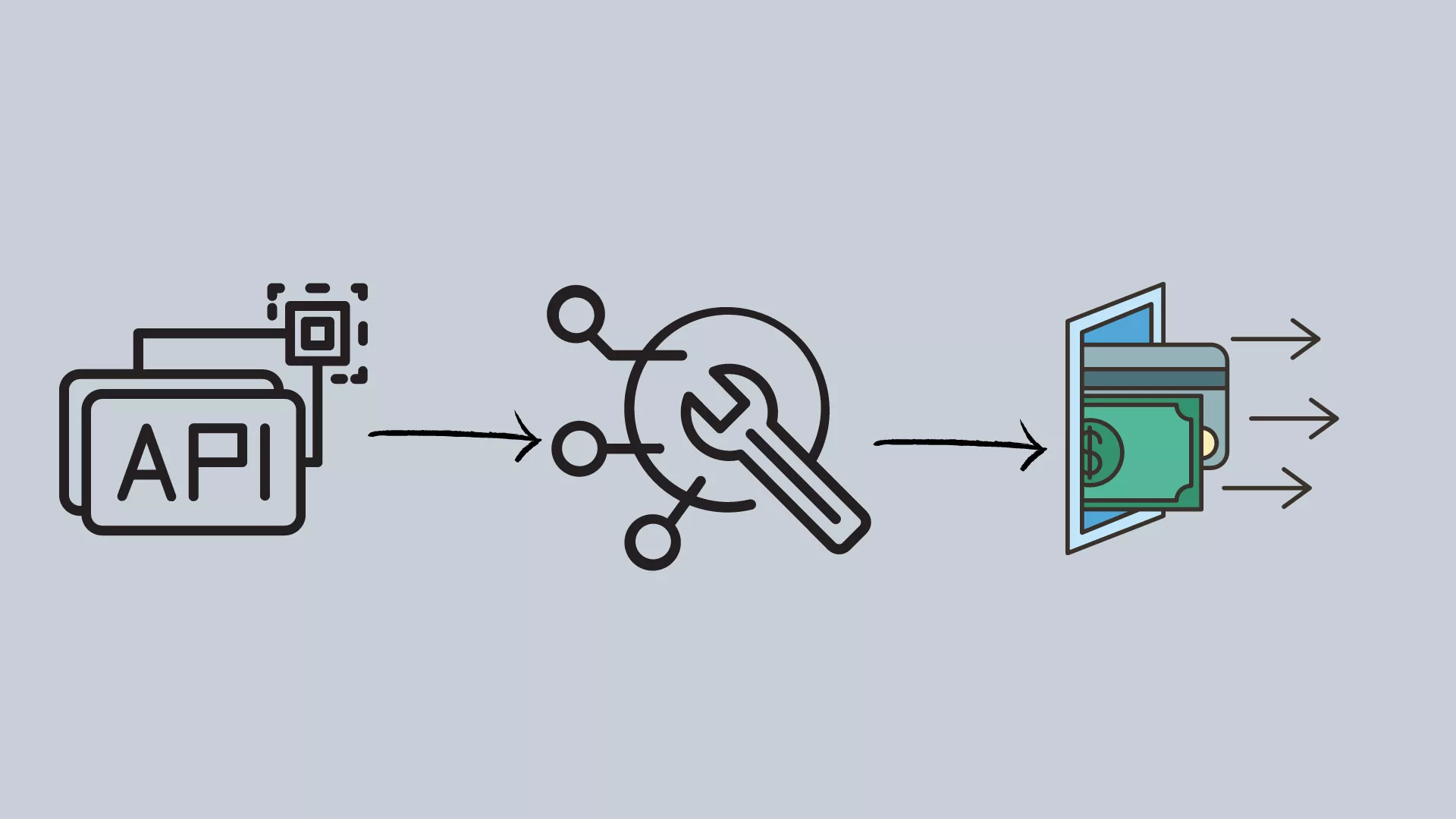
Centralize your pricing logic in a single source of truth within the middleware stack. This allows you to update rates, apply discounts, or change billing models without redeploying code across multiple services. By decoupling pricing from the middleware, you ensure consistency across all API endpoints and reduce the risk of errors. This centralization also simplifies auditing and makes it easier to adjust monetization strategies in response to market changes.
Avoid revenue leakage pitfalls
Middleware acts as the central nervous system for your API monetization stack. When this layer is misconfigured, it doesn’t just slow down requests—it silently erodes your revenue. The most common leaks stem from poor error handling, untracked requests, and billing logic that fails to capture edge cases.
Fix error handling to capture failed transactions
When an API call fails, it is often treated as a non-event. This is a critical mistake. If a request times out or returns a 500 error, you must determine whether the underlying service actually processed the payment or transaction. If it did, but the middleware failed to relay the success signal, you lose revenue. Implement idempotency keys and retry logic with explicit status checks to ensure every attempted transaction is accounted for, whether it succeeds or fails.
Track every request for accurate billing
Untracked requests are invisible costs. If your middleware does not log every incoming API call with a unique request ID, you cannot reconcile usage against your billing records. Gaps in logging often appear during high-traffic spikes or network partitions. Use a centralized logging system that captures the full lifecycle of each request. This data is essential for auditing and identifying where the system drops the ball.
Simplify billing logic to handle edge cases
Complex billing rules often introduce bugs. If your middleware tries to apply discounts, tiered pricing, or multi-currency conversions in real-time, it creates opportunities for calculation errors. These errors lead to undercharging or overcharging, both of which damage trust and revenue. Simplify the logic by offloading complex calculations to a dedicated billing engine. Keep the middleware focused on routing and data transformation, ensuring that the billing layer receives clean, pre-validated data.
Launch and iterate pricing
Your pricing model is a hypothesis until it meets real traffic. Treat the initial launch as a controlled experiment rather than a final decision. Monitor key metrics like request volume, conversion rates, and churn signals daily. If adoption stalls, the issue is rarely the product; it is usually friction in billing or unclear value perception.
Gather direct feedback from early users to refine your tiers. Are they hitting rate limits too quickly? Do they need more granular data? Use this input to adjust feature gates or introduce new pricing buckets. Speakeasy recommends adding entitlement checks as middleware to validate access before billing, ensuring you only charge for valid, authorized usage while preventing revenue leakage from unauthorized requests.
Iterate quickly. A static pricing page loses money. Adjust per-request costs or monthly caps based on actual consumption patterns. If a tier sees high churn, consider offering a migration path to a more suitable plan rather than losing the customer entirely. The goal is to align your pricing structure with the value your middleware delivers, not just the technical cost of serving requests.
-
Verify metering accuracy with test payloads
-
Ensure billing integration handles failed payments gracefully
-
Confirm customer support can answer pricing questions
-
Check analytics dashboards for real-time usage data
Common questions about middleware monetization
Payment middleware is the unseen layer that allows software to accept payments, sync with ERPs, and communicate with multiple payment gateways or point-of-sale platforms. It acts as the "glue" that facilitates the connection of different software systems, applications, tools, or databases, enabling seamless integration between various payment methods like ACH, cards, and digital wallets.
What is payment middleware?
Payment middleware serves as the central nervous system for transaction processing. Instead of building direct connections to every possible payment gateway, banks and fintech companies use middleware to standardize communication. This allows a single integration to route transactions to the appropriate processor, reducing development time and operational complexity.
How does middleware generate revenue?
Monetization strategies typically involve charging a fee per transaction, a monthly subscription for API access, or a percentage of the total payment volume. By abstracting the complexity of payment routing, middleware providers can offer value-added services like fraud detection, analytics, and multi-currency support, which justify premium pricing tiers.
Why is middleware important for APIs?
Middleware simplifies API management by handling authentication, rate limiting, and data transformation. For developers, this means they can focus on building core features rather than maintaining complex payment infrastructure. This efficiency accelerates time-to-market and ensures that applications remain compliant with evolving financial regulations.
No comments yet. Be the first to share your thoughts!