
Map your middleware value chain
Before setting a price, you must define exactly which layer of the AI stack your middleware occupies. Monetization strategies differ significantly depending on whether you are providing data aggregation, oracle services, or API bridges. The primary economic driver—whether it is latency, data quality, or access—determines how you structure your billing.
Identify the specific friction point your middleware solves. If you are reducing latency for real-time inference, your value proposition is speed. If you are aggregating disparate data sources, your value is quality and consistency. This clarity anchors your pricing model, preventing the common mistake of treating middleware as a commodity rather than a critical infrastructure component.
Kong Inc. emphasizes turning every AI resource into revenue by metering and billing consumption limits on agents and APIs. This approach works best when you can clearly isolate the resource being consumed, whether it is API calls, data throughput, or compute time. By mapping your value chain to a specific, billable resource, you create a transparent pricing structure that scales with usage.
Choose a pricing model that fits usage patterns
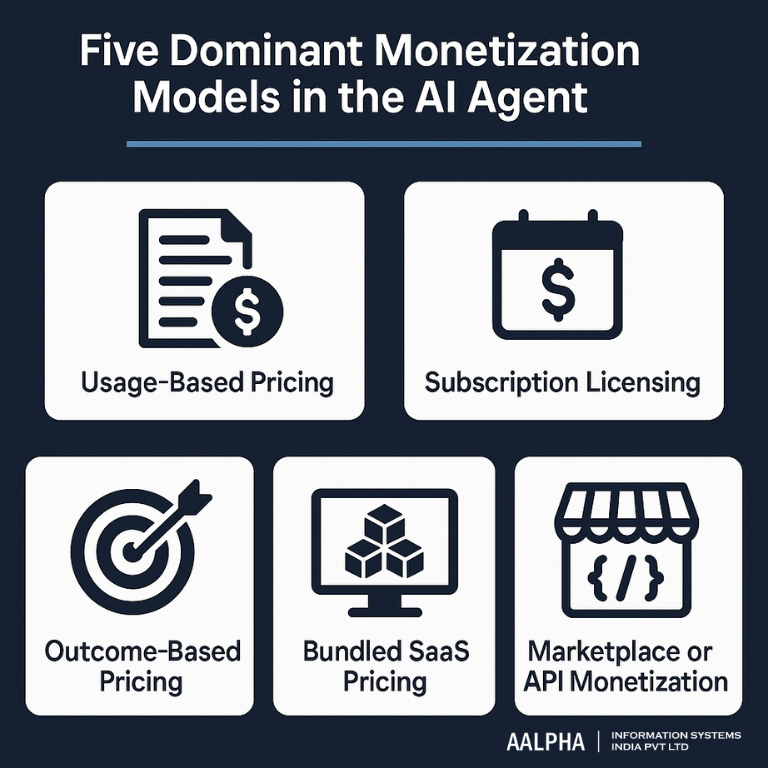
Selecting the right AI middleware pricing model depends on how predictable your API consumption will be. Unlike traditional SaaS, AI usage is often sporadic and compute-intensive, meaning a flat fee rarely captures the true cost of inference.
You need to align your billing structure with the variance in your customers' workloads. A model that works for a stable, high-volume enterprise might bankrupt a startup with bursty, unpredictable requests. The goal is to cover your infrastructure costs while remaining attractive to buyers who fear unexpected bills.
Use this comparison to weigh the trade-offs between predictability, administrative overhead, and customer fit for each primary monetization approach.
| Model | Revenue Predictability | Admin Overhead | Best For |
|---|---|---|---|
| Per-Call | Low | Low | Bursty traffic, unpredictable usage, or early-stage APIs |
| Tiered Subscription | High | Medium | Stable enterprises with consistent monthly API quotas |
| Volume-Based | Medium | High | High-volume partners requiring bulk discounts and long-term contracts |
Per-call billing charges a fixed rate for every API request. This is the simplest model to implement and easiest for customers to understand. However, it offers low revenue predictability for you and can lead to "bill shock" for customers if their usage spikes. It works best when you are unsure of your customers' long-term volume.
Tiered subscriptions provide a monthly allowance of API calls. Customers pay a fixed fee for a specific tier (e.g., 10k, 100k, or 1M calls). This model offers high revenue predictability and reduces churn because customers are locked into a monthly commitment. It is ideal for stable enterprise clients who need to budget their AI spend.
Volume-based pricing offers discounts as usage increases. This model requires more complex billing infrastructure and higher administrative overhead to track and verify usage. However, it is the most effective way to secure large, long-term contracts with high-volume partners who are price-sensitive.
Match the model to your customer's behavior. If your users are testing your AI, start with per-call. If they are building production workflows, move to tiered subscriptions. For strategic partners, negotiate volume-based deals to lock in their usage.
Implement metering and billing infrastructure
To monetize AI middleware effectively, you must build systems that track every API call and convert usage into invoices without manual intervention. This technical foundation turns raw traffic into predictable revenue.
Place a middleware layer at your API gateway to capture every incoming request. This component logs essential metadata, including the user ID, model type, and token count. Tools like Kong Konnect automate this process, allowing you to meter consumption across agents and LLMs while enforcing limits to prevent abuse [src-serp-7].
Raw logs must be aggregated into a time-series database to support efficient billing queries. This storage layer handles the high volume of events generated by AI models, ensuring that usage data is immutable and ready for audit. Proper indexing here prevents latency spikes during peak traffic.
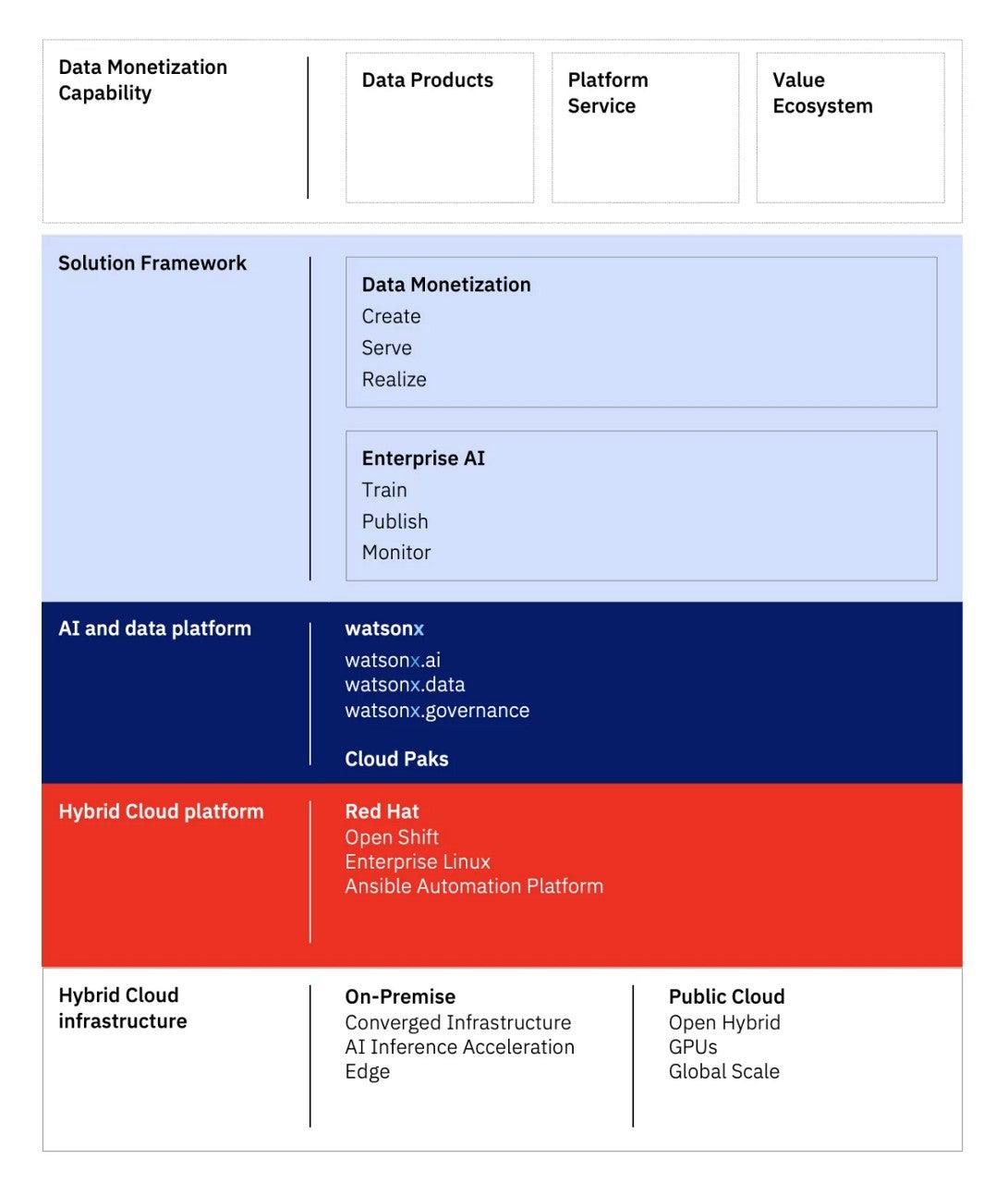
Define clear pricing rules that map usage metrics to specific costs. Implement rate limits to protect your infrastructure from runaway costs or malicious attacks. These policies act as the bridge between technical telemetry and financial logic, ensuring that overages are caught before they impact your bottom line.
Connect your billing engine to the usage database to produce invoices automatically. The system should calculate charges based on the stored telemetry and send them to clients via email or a self-service portal. Automation eliminates the need for manual reconciliation, reducing operational overhead and accelerating cash flow.
Building this infrastructure requires precision. Treat your billing system as a core product feature, not an afterthought. Accurate metering builds trust with enterprise clients and ensures your AI middleware remains profitable as scale increases.
Structure enterprise contracts and SLAs
Enterprise buyers do not purchase AI capabilities; they purchase predictable outcomes. Your contract must translate technical performance into business guarantees that justify premium pricing while capping your liability. Without this structure, AI middleware becomes a cost center rather than a revenue driver.
Start by defining Service Level Agreements (SLAs) around measurable business metrics, not just uptime. For enterprise AI, this means guaranteeing response latency, accuracy thresholds, or throughput limits. If your middleware processes customer data, specify data residency and compliance standards (e.g., SOC 2, GDPR) as contractual obligations. This shifts the conversation from "does it work?" to "does it work reliably for my business?"
Next, structure liability caps and indemnification clauses carefully. AI models can hallucinate or produce biased outputs. Your contract must explicitly exclude liability for content accuracy unless you are providing a curated, human-reviewed service. Instead, cap liability at a multiple of annual fees (e.g., 12x–24x). This protects your margin while giving legal teams the comfort they need to sign.
Finally, include clear termination and exit clauses. Enterprise clients need to know how to extract their data if the relationship ends. Specify data portability formats and transition support periods. This reduces friction during negotiations and signals confidence in your platform’s stability. As Thales CPL notes, monetizing AI requires ensuring ROI is demonstrable and protected through these structural safeguards.
Validate ROI with pilot programs
Running a controlled pilot program is the only way to move from theoretical value to proven revenue. This stage transitions your AI middleware from a feature discussion to a measurable business asset. By partnering with early enterprise adopters, you gather the real-world data needed to refine your pricing model and prove cost savings.
Start by selecting pilot partners who have a clear, high-friction problem your middleware solves. Avoid broad, open-ended trials. Instead, define a specific scope with agreed-upon success metrics before deployment. These metrics should focus on tangible outcomes: reduced latency, lower compute costs, or increased transaction throughput. Without these baselines, you cannot calculate return on investment.
During the pilot, track usage patterns and performance data rigorously. This data reveals how the middleware performs under actual load, not just in staging environments. Use these insights to adjust your pricing tiers. If the middleware consistently saves the client 20% in infrastructure costs, your pricing should reflect a percentage of those savings rather than a flat fee. This aligns your incentives with the client's success.
Finally, document the pilot’s results in a case study. This proof point is essential for securing larger contracts. As noted by industry experts, the monetization stage is where companies actively prove AI's value in the market. A well-documented pilot turns your middleware from a speculative tool into a revenue-generating necessity.
-
Identify 2-3 early adopter partners with high-friction use cases
-
Define specific, measurable success metrics (e.g., cost reduction, latency)
-
Establish baseline performance data before deployment
-
Set a fixed timeline (4-8 weeks) for the pilot phase
-
Plan for data collection on usage patterns and performance
No comments yet. Be the first to share your thoughts!