
Choose a pricing model for your middleware
Selecting the right pricing model depends on how your middleware handles data and who your B2B customers are. The three standard approaches are tiered, usage-based, and hybrid. Each model balances predictability for your revenue against flexibility for the buyer.
Use the table below to compare how these models perform across key operational metrics.
| Model | Revenue Predictability | Billing Complexity | Best For |
|---|---|---|---|
| Tiered | High | Low | Stable, high-volume B2B contracts |
| Usage-based | Low | High | Variable workloads or new products |
| Hybrid | Medium | Medium | Enterprise clients with mixed needs |
Tiered pricing offers the highest revenue predictability. It works best when your middleware handles stable, high-volume transactions. Buyers appreciate the simplicity of fixed monthly fees that scale with their usage brackets.
Usage-based pricing scales directly with consumption. This model is ideal for variable workloads or when launching a new middleware product where usage patterns are unclear. However, it requires robust billing infrastructure to track metrics accurately and avoids surprise invoices.
Hybrid pricing combines a base subscription with per-unit overage charges. This approach suits enterprise clients who need baseline access but may spike in usage during peak seasons. It balances the need for guaranteed minimum revenue with the flexibility to capture extra value.
Start by auditing your current middleware capabilities. If your infrastructure can handle real-time metering, usage-based pricing might capture more value. If your clients prefer budget certainty, tiered plans reduce churn. Most successful middleware platforms begin with a hybrid model to satisfy both buyer types.
Configure the API gateway for billing
Configuring the API gateway for billing is the technical bridge between your middleware logic and actual revenue collection. This process involves instrumenting your API layer to track usage, enforcing limits, and passing billing events to a payment processor like Stripe. The goal is to create a system where every API call is accounted for and billed accurately without adding significant latency to the request cycle.
1. Instrument the middleware to track usage
The first step is to embed usage tracking directly into your API middleware. This middleware acts as a gatekeeper, inspecting every incoming request before it reaches your core business logic. You need to capture key metrics such as the API key, the endpoint accessed, and the number of requests made within a specific time window.
Implement a counter that increments for each valid request. Store this data in a fast, ephemeral store like Redis for real-time counting, or batch it for asynchronous processing if your traffic is high-volume. Ensure you are tracking the specific units relevant to your pricing model, whether that is per request, per megabyte of data transferred, or per active user.
2. Enforce rate limits and access controls
Before billing can occur, you must ensure that only authorized clients are accessing your API and that they stay within their subscribed tiers. Configure your gateway to validate API keys against your database or identity provider. If a key is invalid or expired, reject the request immediately with a 401 Unauthorized status.
Next, implement rate limiting rules based on the client’s subscription plan. For example, a free tier might allow 100 requests per hour, while a premium tier allows 10,000. If a client exceeds their limit, return a 429 Too Many Requests response. This step prevents abuse and ensures that billing events only trigger for legitimate, allowed usage.
3. Integrate with a billing provider
Once usage is tracked and limits are enforced, connect your middleware to a billing provider. Stripe is the industry standard for this integration due to its robust API and support for complex pricing models. You will need to create a customer object in Stripe for each unique API client and associate their API key with a Stripe customer ID.
When a billing period ends, your system should aggregate the usage data collected by the middleware. Pass this usage data to Stripe’s metered billing API. Stripe will then calculate the total cost based on your predefined pricing rules (e.g., $0.01 per request over the first 1,000) and generate an invoice. This approach allows you to charge clients only for what they actually use, reducing friction and increasing adoption.
4. Handle webhook events for payment status
Billing is not complete until payment is processed. Configure your gateway to listen for Stripe webhook events, particularly invoice.payment_succeeded and invoice.payment_failed. When a payment fails, you need a mechanism to notify the client and potentially suspend their API access if the issue persists.
Implement a retry logic for failed payments, typically giving clients a grace period before revoking access. This ensures that temporary payment issues do not immediately disrupt service, while still protecting your revenue stream. Keep a log of all webhook events for auditing and dispute resolution purposes.
5. Test the billing flow end-to-end
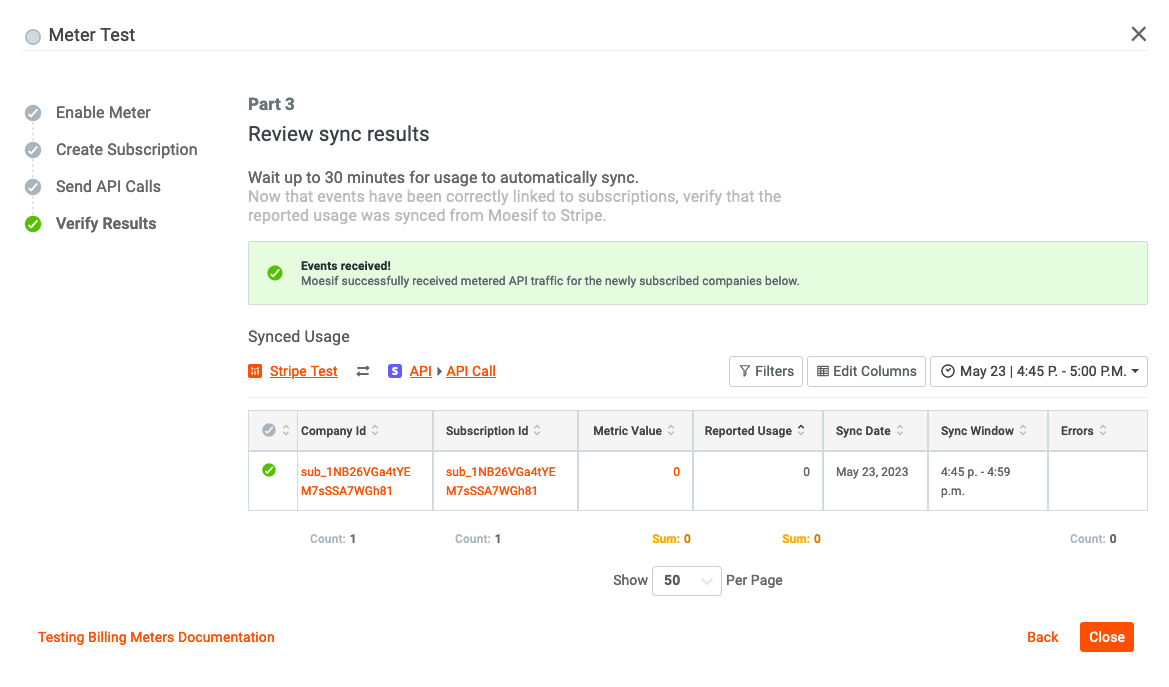
Before launching, rigorously test the entire billing flow in a sandbox environment. Use Stripe’s test modes to simulate various scenarios, including successful payments, declined cards, and usage spikes. Verify that the middleware correctly captures usage, that the billing provider calculates charges accurately, and that webhooks update the client’s status in real time.
Pay special attention to edge cases, such as clients who exceed their limits during peak hours or those who cancel their subscriptions mid-cycle. Ensure your system handles these scenarios gracefully, adjusting access and billing accordingly. Once testing is complete, you can confidently deploy your configured API gateway for billing to production.
Avoid common billing integration errors
Middleware APIs sit between your core product and the end user, making them a high-traffic point for billing data. When the integration falters, the impact is immediate and financial. The most frequent pitfalls involve inaccurate usage counting, opaque billing structures, and a poor developer experience that forces clients to abandon your platform.
Fix inaccurate usage counting
Usage-based billing requires precise metering. If your middleware misses even a small percentage of API calls, your revenue leaks. Conversely, over-counting erodes trust and triggers disputes. Implement idempotency keys and deduplication logic at the middleware layer to ensure each billable event is counted exactly once.
Ensure billing transparency
Clients need to see exactly what they are paying for. Hidden fees or vague line items in middleware invoices create friction. Provide a clear breakdown of costs, including any markup the middleware adds on top of the underlying provider’s fees. Transparency builds trust and reduces the time your support team spends answering billing queries.
Improve the developer experience
Billing should not be an afterthought. Integrate billing APIs directly into your developer portal. Allow developers to view real-time usage, set spending limits, and manage payment methods without leaving the documentation. A smooth billing experience reduces onboarding friction and encourages adoption of higher-tier plans.
Verify with official standards
Refer to official documentation from payment providers like Stripe or PayPal for best practices in API billing integration. Their guides often include specific warnings about common pitfalls, such as webhook retry failures or currency conversion errors. Aligning with these standards ensures your middleware remains robust and compliant.
Validate revenue assumptions with pilot data
Before committing to a full launch, run a controlled pilot to stress-test your middleware monetization strategy against real usage patterns. This phase isolates pricing sensitivity and adoption friction without risking brand reputation or revenue stability. Treat the pilot as a live audit rather than a marketing campaign.
Start by selecting a narrow cohort of 10–20 enterprise or high-volume API consumers who represent your ideal user profile. Offer them a limited-time access tier—such as a discounted monthly rate or a capped usage package—that mirrors your proposed full-scale model. This allows you to observe whether the price point triggers conversion or churn without the noise of broad-market variability.
Track three specific metrics during the four-to-eight-week pilot window: API call volume per user, error rates during peak loads, and support ticket frequency related to billing or access. Compare these against your baseline projections. If usage drops significantly below the forecast, the issue may be pricing rather than product fit. If error rates spike, your middleware architecture may need scaling before monetization scales.
Use the pilot data to refine your pricing tiers. If users consistently hit usage caps, consider introducing overage fees or tiered volume discounts. If they underutilize the API, simplify the onboarding or adjust the feature set included in the entry tier. The goal is to align the monetization model with actual consumption behavior, not theoretical assumptions.
Finalize your middleware monetization checklist
Before going live, ensure your middleware monetization infrastructure handles traffic, billing, and compliance without friction. This checklist covers the technical, legal, and operational essentials.
- API Gateway Configuration: Verify that rate limits, quotas, and usage tracking are active in your gateway (e.g., Kong, AWS API Gateway).
- Payment Integration: Confirm that your middleware correctly routes payment data to Stripe or similar processors, including 3D Secure handling [src-2].
- Legal Documentation: Publish clear API terms of service and privacy policies, specifically addressing data usage and liability.
- Monitoring & Alerts: Set up real-time alerts for failed transactions, latency spikes, or unexpected traffic surges.
- Security Audit: Ensure all endpoints are secured with API keys or OAuth, and that sensitive data is encrypted in transit.

Frequently asked questions about API billing
Middleware monetization involves more than just setting a price; it requires handling edge cases that developers encounter during integration. Below are the most common questions regarding billing structures, legal compliance, and managing overages.
These questions address the core mechanics of middleware monetization. By anticipating these issues, you can build a billing system that scales with your API’s growth.
Work through The to API-First Middleware Monetization
No comments yet. Be the first to share your thoughts!