
Choose your middleware pricing model
Selecting the right middleware monetization strategies 2026 depends on matching your billing structure to how developers actually consume your service. Middleware sits between applications and data sources, acting as the plumbing for API calls, data validation, or security checks. Because usage patterns vary wildly—from occasional syncs to high-frequency real-time feeds—one pricing model rarely fits all.
The three primary approaches are usage-based, subscription, and hybrid models. Usage-based pricing charges per API call, transaction, or volume of data processed. This aligns costs directly with value, making it ideal for high-volume, unpredictable workloads like blockchain oracle feeds or bridge transactions. Subscription models charge a flat monthly fee for access to a tier of features or a set usage cap. This provides predictable revenue for you and predictable costs for the developer, suitable for stable, routine integrations. Hybrid models combine both, often offering a base subscription for core access while charging overages for heavy usage.
| Model | Best For | Revenue Predictability | Dev Flexibility |
|---|---|---|---|
| Usage-Based | High-volume, unpredictable workloads (e.g., oracle data, bridge txs) | Low | High |
| Subscription | Stable, routine integrations with fixed feature sets | High | Low |
| Hybrid | Services with baseline access needs plus variable spikes | Medium-High | Medium |
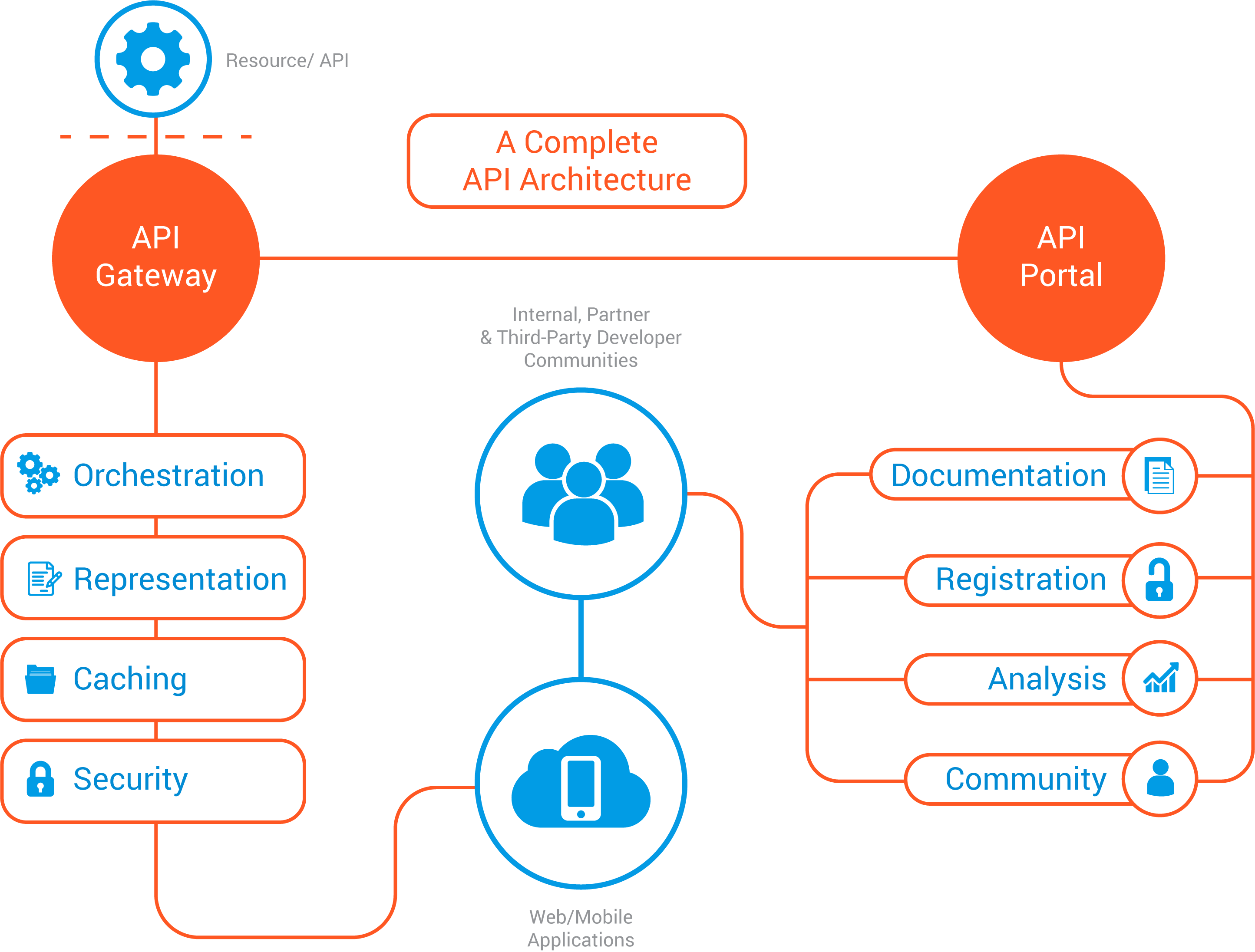
Map out how your middleware is used. Is it called once per user action or thousands of times per second? High-frequency, variable usage favors usage-based pricing. Low-frequency, consistent usage supports subscription tiers.
Calculate your per-unit infrastructure costs. If your marginal cost per API call is low, usage-based pricing can scale profitably. If your costs are fixed regardless of volume, a subscription model protects your margins.
Launch a pilot with a small group of developers. Gather feedback on whether the pricing feels fair relative to the value delivered. Adjust your tiers or per-unit rates based on this real-world data before a full public launch.
Choosing a middleware monetization strategies 2026 framework is not a one-time decision. As your middleware evolves and developer needs shift, be prepared to iterate. Start with the model that best matches your current usage profile, but keep your pricing architecture flexible enough to adapt.
Implement usage-based billing infrastructure
To execute effective middleware monetization strategies 2026, you must build an infrastructure that accurately tracks consumption and enforces limits before billing occurs. This technical foundation separates viable API businesses from those that bleed revenue through untracked usage or billing errors. The process involves instrumenting your middleware, defining rate limits, and connecting to a billing gateway that supports granular, per-call charging.
Start by integrating a telemetry library or custom middleware function that intercepts every API request. This component must extract key identifiers: the API key, endpoint, method, and timestamp. Log these events to a time-series database or analytics pipeline like Prometheus or Datadog. Accuracy here is non-negotiable; if you cannot prove how many calls a client made, you cannot bill them correctly. Ensure the logging mechanism is asynchronous to avoid adding latency to your API responses.
Define usage tiers directly in your gateway or middleware layer. Use tools like Kong, Apigee, or custom Redis-based counters to enforce limits per API key or customer group. Set thresholds for daily, monthly, or burst usage. When a client exceeds their limit, return a standard HTTP 429 Too Many Requests response. This step protects your infrastructure from abuse and creates the "overage" data points necessary for usage-based billing models.
Connect your telemetry data to a billing provider that supports metered billing, such as Stripe Billing, Chargebee, or Recurly. These platforms ingest usage events via API and automatically calculate charges based on your pricing rules (e.g., $0.001 per call). Avoid building this logic in-house unless you have a dedicated revenue operations team. The gateway handles invoice generation, payment collection, and dunning management, allowing you to focus on API development.
Provide your API consumers with a self-service portal to view their current usage, remaining quota, and pending charges. Transparency reduces support tickets and builds trust. Most billing gateways offer pre-built customer portals or APIs to expose usage data. Ensure the data syncs with near-real-time latency so clients can adjust their integration if they approach their limits. This visibility is a key feature of modern middleware monetization strategies 2026.
List your API on B2B marketplaces
Publishing your middleware API on established B2B marketplaces is one of the most effective middleware monetization strategies 2026. These platforms aggregate enterprise buyers who are actively searching for integration solutions, reducing the friction of customer acquisition. Instead of building a sales team from scratch, you leverage the marketplace’s existing trust and procurement workflows.
To succeed, you must optimize your listing for discovery and compliance. Enterprise buyers require proof of reliability before they will sign a contract. Your API documentation, SLA terms, and security certifications must be front and center. A well-structured listing acts as a self-serve sales funnel, allowing prospects to test your middleware in a sandbox environment before committing to production.
Trust signals are non-negotiable in 2026. Buyers look for SOC 2 compliance, GDPR adherence, and clear data residency options. Without these credentials, your API will likely be filtered out during the vendor risk assessment phase. Ensure your marketplace profile explicitly highlights these security features to accelerate the buying cycle.
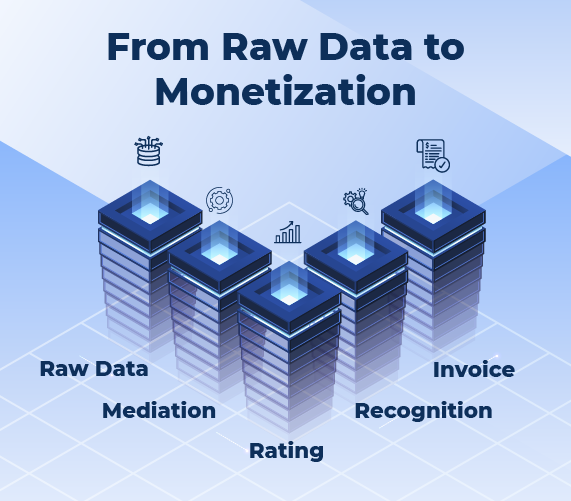
Consider the visual clarity of your data flow. As shown in the image above, effective middleware monetization often hinges on transforming raw data into revenue confidence. This transformation is what enterprise buyers are purchasing. They are not just buying an API endpoint; they are buying the assurance that your middleware can handle their data securely and efficiently. Highlight this value proposition in your marketplace description to stand out from competitors who only list technical specifications.
Finally, keep your pricing model transparent. Marketplaces favor listings that offer clear tiered pricing or usage-based models. Ambiguity in pricing leads to dropped carts and lost enterprise deals. By aligning your listing with the expectations of B2B procurement teams, you turn your marketplace presence into a scalable revenue channel.
Avoid common pricing mistakes
Middleware monetization strategies 2026 require more than just setting a rate card; they demand a precise accounting of operational overhead. Many teams fail because they price for compute alone, ignoring the hidden costs of data integrity and network instability. If your pricing model doesn't cover the cost of being wrong, you will subsidize your users' errors.
Underpricing data freshness
Oracle services and real-time data feeds incur significant costs to maintain low latency. If you charge a flat fee without accounting for the bandwidth and processing power required to keep data fresh, your margins will evaporate during high-traffic periods. Treat data latency as a premium feature, not a baseline expectation.
Ignoring network congestion fees
Bridge services and cross-chain middleware are subject to fluctuating gas prices and network congestion. A fixed-price model for API calls that depend on blockchain transactions exposes you to volatile execution costs. Always build a dynamic surcharge or a usage-based tier that adjusts for network load, or risk absorbing the fees yourself when the network is busy.
Failing to account for error handling
Every failed API call due to upstream errors still consumes resources. If your pricing structure doesn't differentiate between successful responses and retries, you lose money on every timeout. Charge for successful data delivery, or implement a credit system that refunds users for service interruptions, protecting your revenue while maintaining trust.
Verify compliance and security standards
Middleware monetization strategies 2026 depend on trust. Before launching, you must prove your APIs handle data securely and legally. A single breach or compliance failure can destroy revenue streams overnight. Treat this phase as a gate, not an afterthought.
Audit data handling for GDPR and CCPA
If your middleware processes personal data, you must map every data flow. Identify where user information enters your system, how it is transformed, and where it exits. Document this chain to satisfy GDPR Article 30 and CCPA transparency requirements.
Implement data minimization: only collect and process what is strictly necessary for the API function. Anonymize or pseudonymize data where possible. This reduces liability and simplifies compliance audits. IBM notes that effective data monetization requires leveraging AI capabilities responsibly, which begins with clean, compliant data governance.
Secure bridge APIs and smart contracts
For bridge APIs that move assets between chains, security is non-negotiable. These APIs often act as custodians of value, making them prime targets for exploits. You must conduct third-party smart contract audits before any mainnet deployment. Reputable firms like CertiK or OpenZeppelin provide formal verification reports that serve as proof of security for enterprise clients.
Implement rate limiting and input validation on all API endpoints. Middleware that fails to sanitize inputs risks injection attacks that can drain funds or corrupt data. Use multi-signature wallets for administrative functions to prevent single-point-of-failure compromises.
Build a compliance checklist
Use this checklist to verify your readiness before going live. Each item represents a critical control point for secure, legal middleware operations.
Frequently asked questions about middleware monetization strategies 2026
What is the difference between pricing and monetization?
Pricing is a specific expression of a broader monetization framework. Monetization defines the entire revenue model—how you capture value from your middleware API—while pricing sets the actual cost for users. For example, if your middleware monetization strategies 2026 focus on a subscription model, pricing determines whether that subscription is $10 or $100 per month.
What are the current trends in app and middleware monetization?
The 2026 landscape for middleware monetization strategies 2026 is shifting toward hybrid models. Industry data indicates a rise in premium pricing and a decline in mid-tier options, with many developers mixing subscriptions with usage-based tiers or localized pricing to maximize reach. This flexibility allows middleware providers to adapt to varying customer sizes and usage patterns.
How do I choose the right monetization model for my API?
Successful middleware monetization strategies 2026 often start by aligning the model with user value. Usage-based pricing works well for high-volume data processing, while flat-rate subscriptions suit stable, recurring utility. Many providers now use hybrid approaches, combining a base subscription fee with overage charges to balance predictable revenue with scalability.
No comments yet. Be the first to share your thoughts!